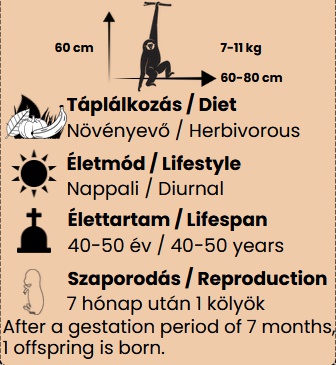

Yellow-cheeked gibbon (Nomascus gabriellae)
Habitat: Lowland tropical forests of Asia
Diet: Herbivorous
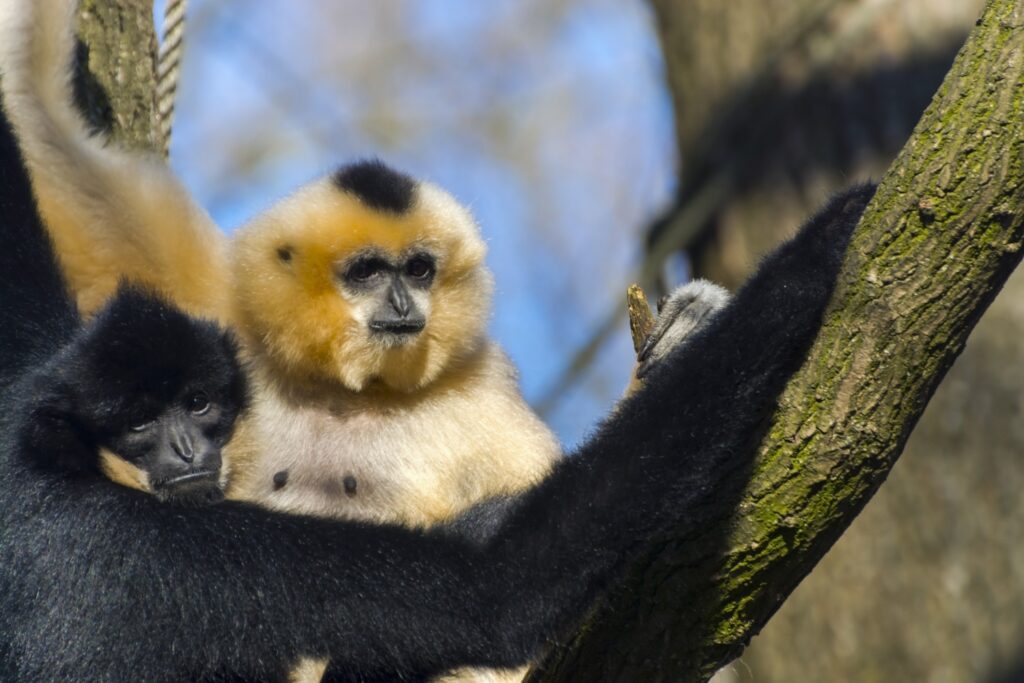
The young of the yellow-cheeked gibbon are born with light yellow fur. After a few months, their coat turns black and only the face remains yellow. In males this becomes the permanent coloration, while females change again as they reach sexual maturity, their fur turning back to a yellowish shade. The young usually remain with their parents until they are about six to eight years old. Unlike many other primates, gibbons form lifelong pairs and both parents take part in raising their offspring.

Gibbons are strongly territorial animals. One of the most characteristic ways they mark and defend their territory is through loud, coordinated songs performed by the male and the female together. These calls can carry for several kilometers through the forest.
Their way of moving is unique in the animal world. They travel through the trees by swinging from branch to branch without using their legs, a movement known as brachiation. With remarkable ease they can cover large vertical distances in seconds and swing across several meters of open space. Besides swinging, they are also excellent jumpers: thanks to their flexible shoulder and hip joints, they can leap accurately over distances of 8–10 meters.
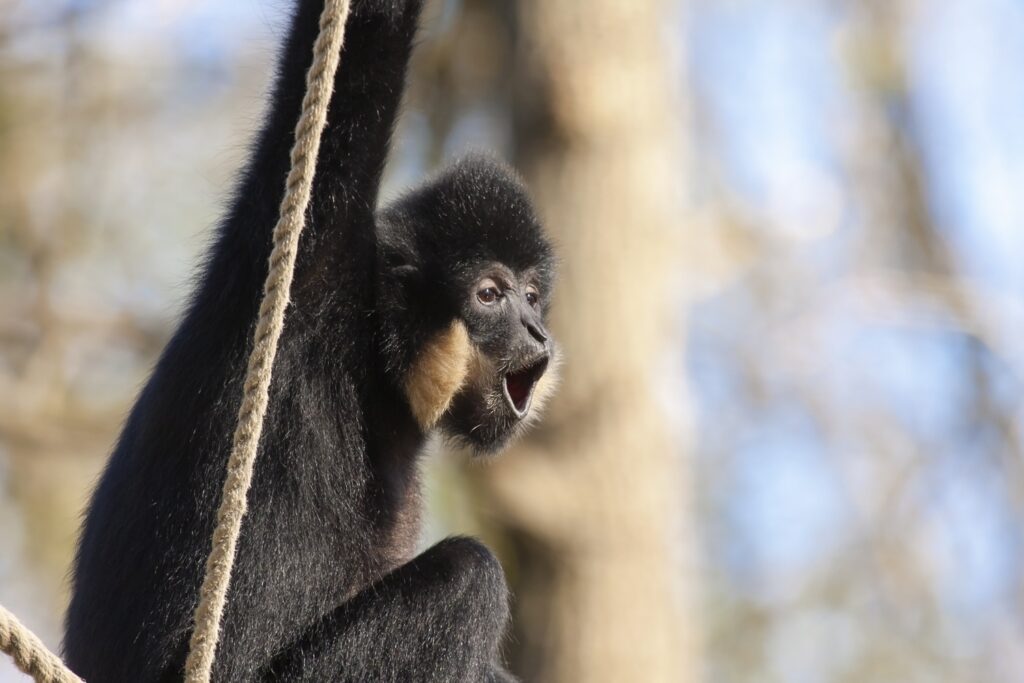
Their arms are noticeably longer than their bodies. When on the ground or on thick branches, they are able to walk upright on two legs while using their arms for balance.
Primates / Hylobatidae
IUCN Redlist: EN (Endangered)



I.