
Raccoons at the Szeged Zoo
You can now meet raccoons in our Europe area!

They are very popular, but did you know that a raccoon’s paw has ten times more sensory receptors than a human palm, and these become even more sensitive in water? Their characteristic “washing” movements help them explore the properties of their food through touch.
Originally native to North and Central America, raccoons were introduced to Europe in the 1930s, first in Germany, mainly for fur farming and game management purposes. Due to escapes and intentional releases, they spread rapidly and are now found in the wild in 27 European countries. In Hungary, they appeared in the 1980s, and today they have a stable population.
Although they are very popular on the internet—thanks to their adaptability to different habitats and proximity to humans—they often search for food in garbage bins in urban areas, which has inspired countless online videos.
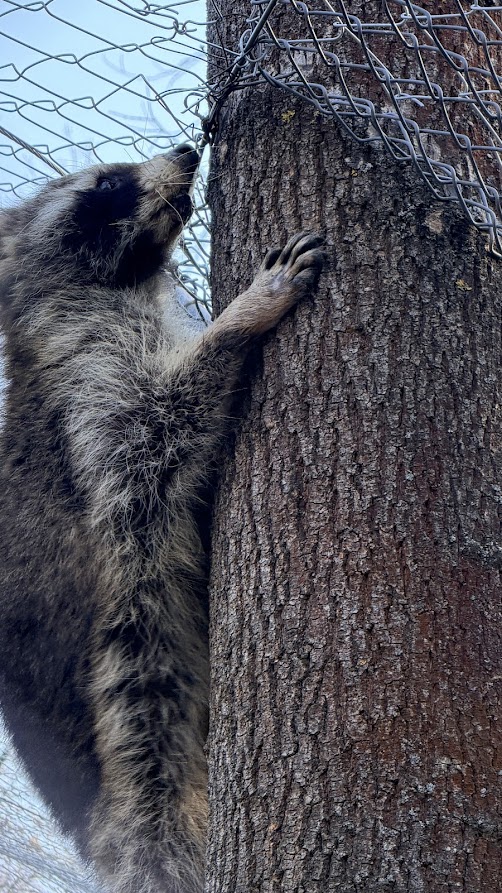
They are considered an invasive species that threatens native wildlife and can spread several diseases affecting both animals and humans. For this reason, since 2010, private individuals in Hungary are not allowed to keep them. Since 2016, they have also been listed among invasive species in the European Union, meaning they cannot be kept or traded privately and may only be housed in zoos under strict conditions.
The raccoons in Szeged were captured in the wild by conservation experts near Ócsa, and were then taken in by the Szegedi Vadaspark.
The raccoons do not live alone in their enclosure—they share it with another new and very interesting species, which will be revealed soon!