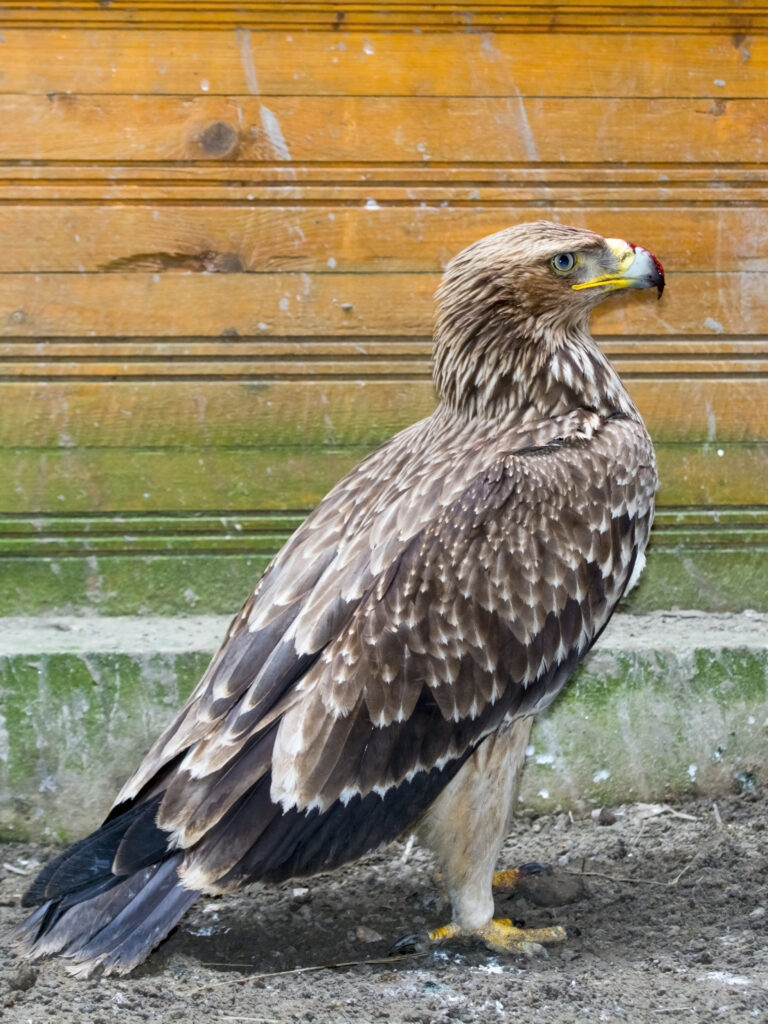
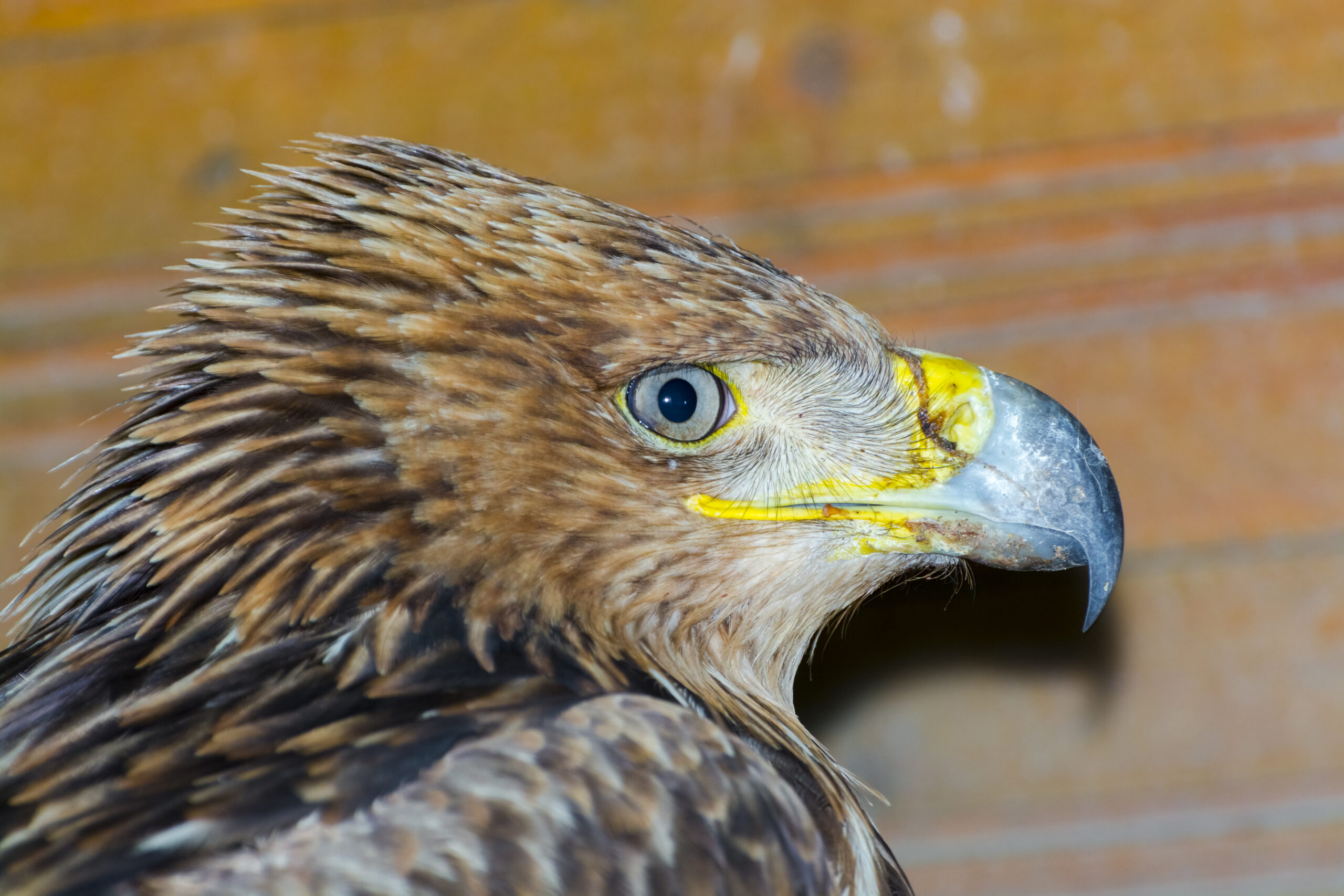
Imperial eagle (Aquila heliaca)
Order: Accipitriformes
Family: Accipitridae
IUCN Red List: VU (Vulnerable)


I.
Habitat
Europe, Asia, Africa

Informations
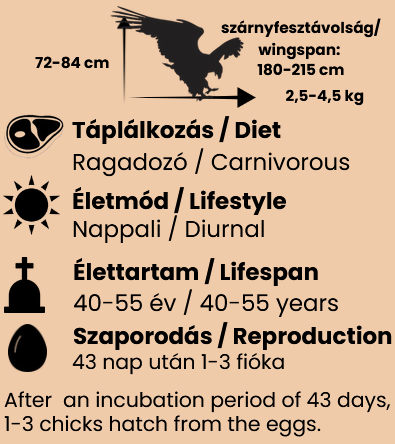
The Eastern imperial eagle is a bird of the Eurasian steppes; Hungary represents the westernmost boundary of its distribution range.
Diet: it is a predator whose primary food source is the European ground squirrel.
A portion of the domestic population breeds in the forests of our central mountains, but the number of pairs nesting in lowland tree lines has also increased. The nest can be massive, as it is used for several years (reaching up to three meters in depth and 1.5 meters in diameter). It is typically built in the crown of a tall tree at a quiet location near feeding grounds, offering a clear view of the surrounding area.
Among eagles, the phenomenon known as cainism can occur: the first chick to hatch begins to peck and attack its sibling, which usually hatches two days later. The smaller, intimidated chick becomes less active in begging for food, grows weak, and eventually perishes or falls from the edge of the nest while trying to escape. If food is scarce, the parents focus their care on the stronger chick to ensure at least one offspring successfully reaches fledging.
About two-thirds of the European population nests in Hungary, making it a bird of high priority for Hungarian nature conservation. Since the mid-2000s, poisoning has become the most frequent anthropogenic threat. The second most significant cause of mortality is electrocution from power lines.