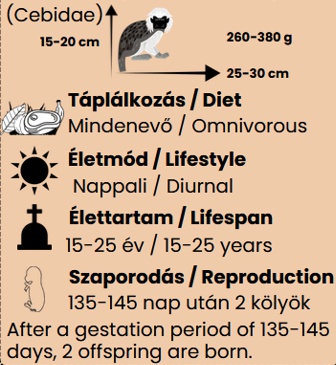

Cotton-top tamarin (Saguinus oedipus)
Habitat: Northwest Colombia. Cotton-top tamarins inhabit tropical rainforests, open woodlands, and secondary growth.
Food habits: Cotton-top tamarins are primarily insectivorous; insects being 40% of their diet. They also eat a large amount of fruit which consists of 38.4% of their diet. Feeding on exudates, which is known as gum feeding, takes up 14.4% of their diet.
The species is characterized by its long, white “mane” of hair, which bears a striking resemblance to the hairstyle of the composer Franz Liszt in his later years—hence its Hungarian name, the “Liszt monkey.” These primates live in cohesive social groups. Females almost invariably give birth to twins. In an exhibit of cooperative breeding, the fathers and older siblings actively assist in the care and carrying of the infants.
Their diet primarily consists of fruits and insects, supplemented to a lesser extent by tree exudates (sap and gum).
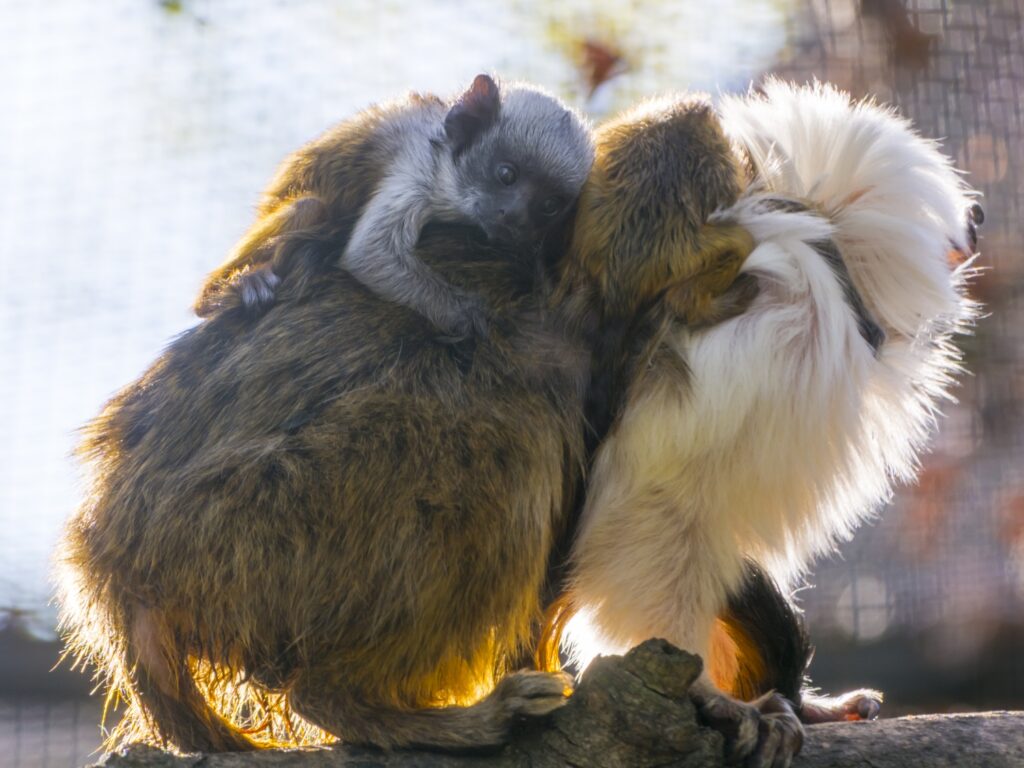
For several years, the callitrichid collection at the Szeged Zoo has been unique, not only within Hungary but throughout Central Europe. Maintaining exotic animals requires heightened care, as the local climate and habitat differ fundamentally from their original natural environment. Furthermore, these small primates are exceptionally sensitive to the nutritional composition of their diet.
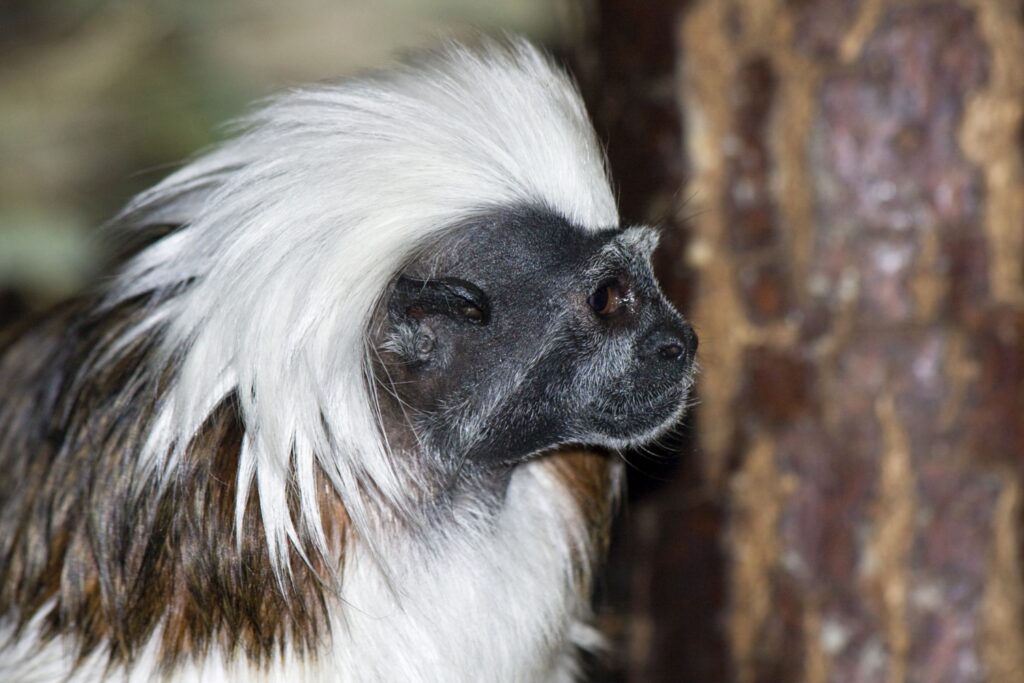
The staff at the Szeged Zoo has successfully developed a high-quality dietary regimen that has since been adopted by several other institutions with great success. The most compelling evidence that both the environment and nutrition are optimal at our facility is the consistent and regular breeding of the species.
Primates / Cebidae
IUCN Redlist: CR (Critically Endangered)



I.