Coypu (Myocastor coypus)
Red: Rodentia
Razred: Myocastoridae
IUCN Red List: LC (Least concern)
Habitat
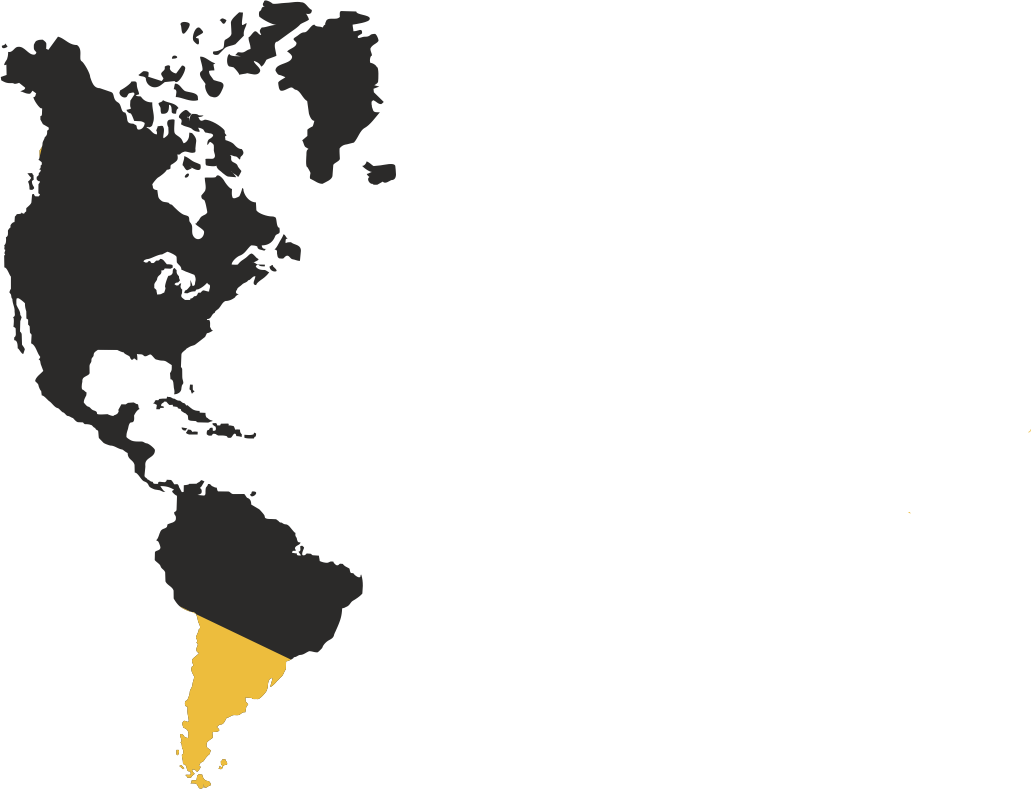
South-America
Informations
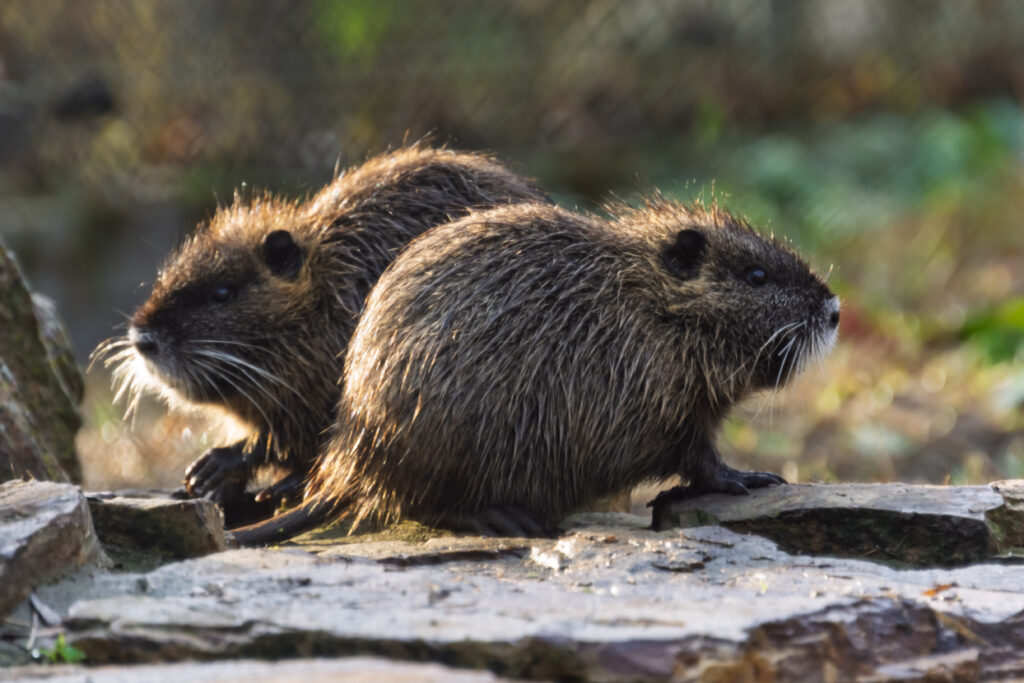
The coypu is native to the subtropical and temperate regions of South America. It was introduced to Europe in the early 1900s for economic purposes, mainly for fur farming. Animals that escaped from farms established self-sustaining populations in the wild. Mild winters favor their spread, and by huddling together in their burrows they are often able to survive freezing temperatures. The coypu is included in the IUCN list of the “100 worst invasive species in the world.”
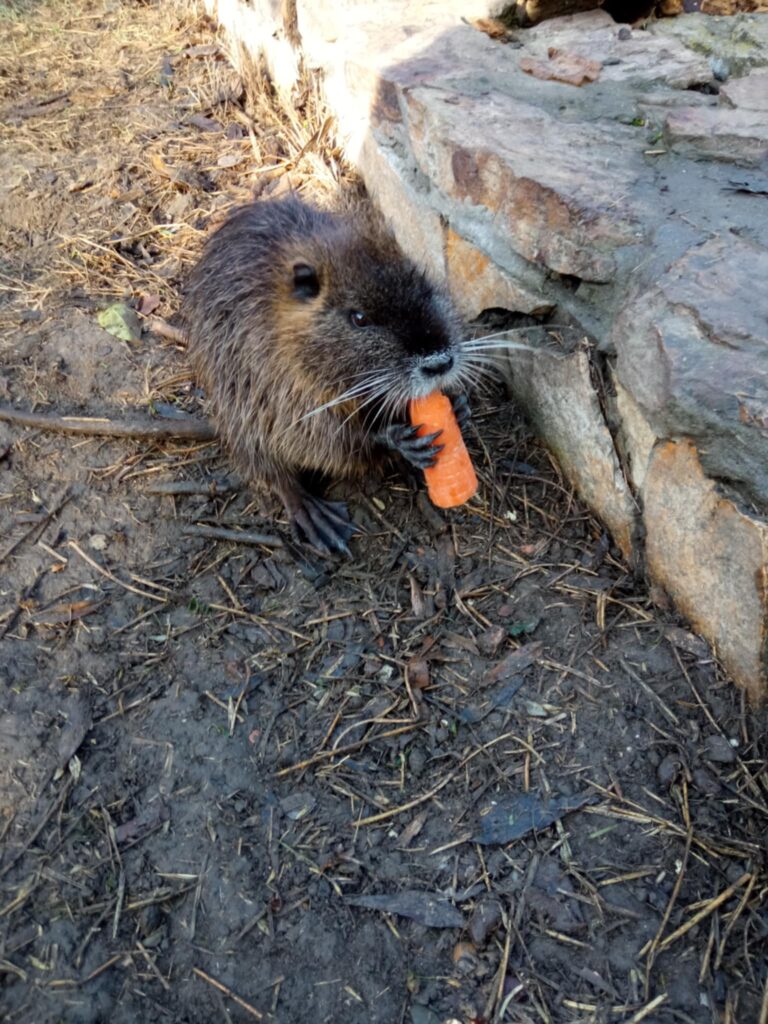
Coypus dig burrows along riverbanks and in embankments, which can cause erosion and damage to water-control structures. They are capable of destroying large areas of aquatic and riverside vegetation, which has a serious impact on other species. By removing plants, they eliminate nesting and hiding places for birds and consume food sources for many animals. They also like to rest in bird nests, often pushing out the chicks and breaking the eggs. In addition, coypus can cause significant damage to agricultural crops and may spread dangerous diseases such as toxoplasmosis.
In Hungary, both small-scale and industrial coypu farming ended in 1992, and since 2010 keeping or breeding the species has been prohibited. The current wild populations have partly formed from individuals that migrated along rivers from neighboring countries and partly from escaped animals.