
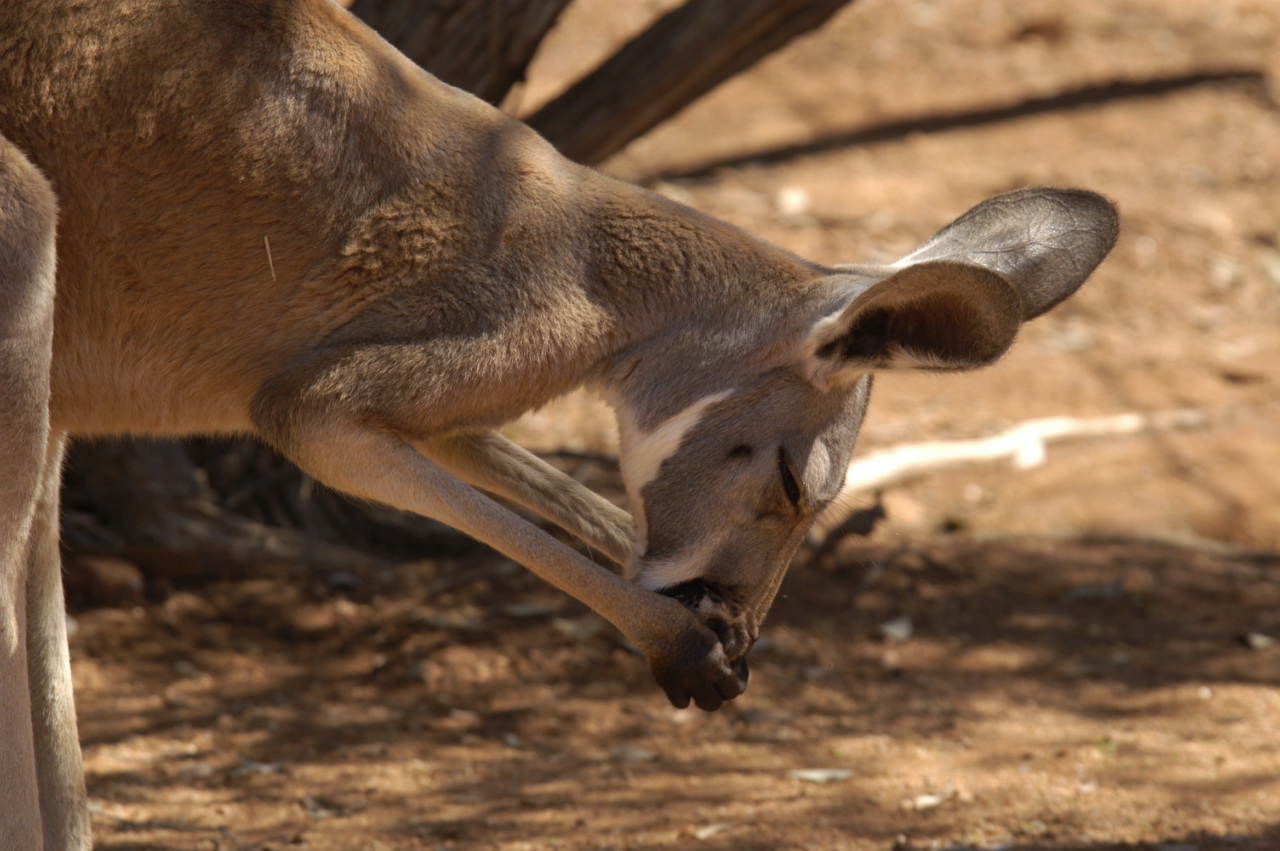
Red Kangaroo (Osphranter rufus)
Order: Diprotodontia
Family: Macropodidae
IUCN Red List: LC (Least Concern)
Habitat
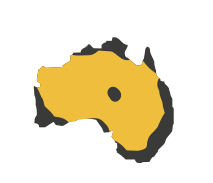
Australia
Information
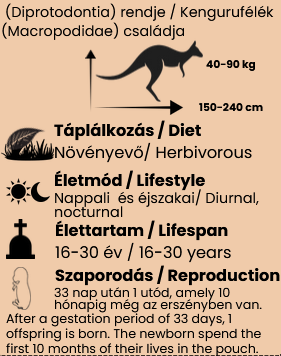
Diet: herbivorous. The red kangaroo is the largest of all living marsupials. They generally live in groups, and females are much smaller than males. Males establish their right to dominance over the group through “kickboxing matches,” involving kicks and physical collisions. They can hop at speeds of up to 50 km/h and are capable of leaps 10 meters long and 2.5 meters high.
Kangaroo offspring are born highly underdeveloped; at birth, they weigh less than 1 gram, are hairless, and their eyes have not yet opened. After birth, they use their forelimbs to crawl into their mother’s pouch, where they remain until they are 8 months old, though they continue to return to the pouch until the age of 10 months.
A female red kangaroo can have offspring in three different stages of development at the same time: one in the pouch, one in the womb in an embryonic state, and one outside the pouch but still dependent on its mother’s milk.
In Australia, the red kangaroo is among the species that can be hunted. It is believed that culling them is necessary because they have spread in large numbers across open, grassy plains. They easily jump over the wire fences that farmers have installed to protect their pastures.