
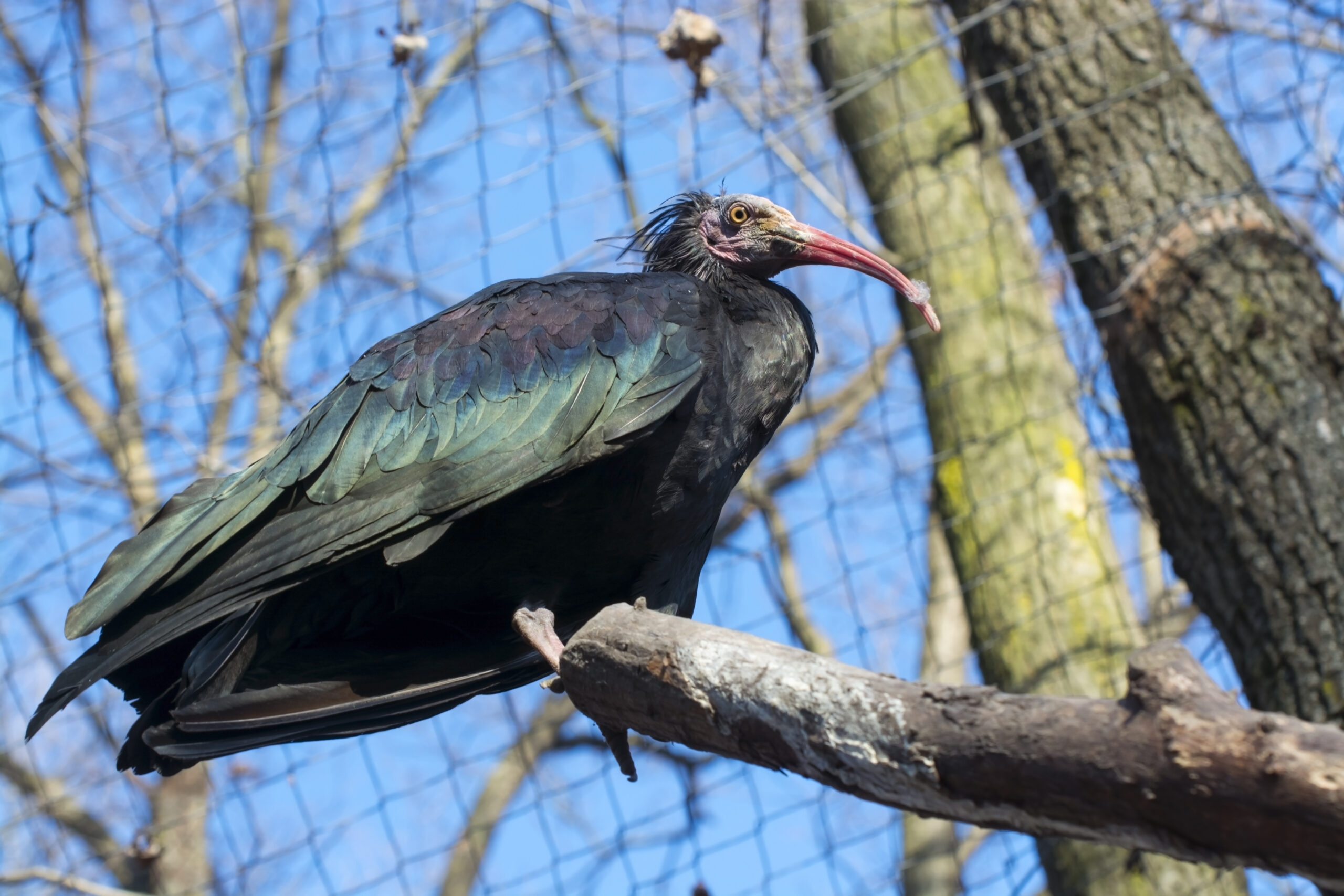
Northern bald ibis (Geronticus eremita)
Order: Pelecaniformes
Family: Threskiornithidae
IUCN Red List: EN (Endangered)

I.
Habitat
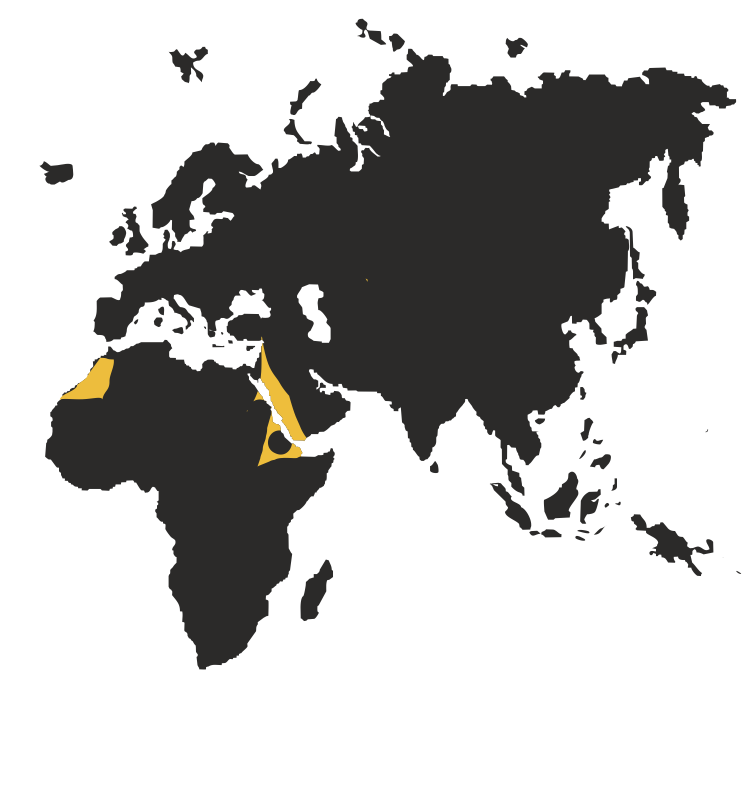
Northern bald ibis isfound in open areas such as grasslands, rocky mountains, and semi-deserts, often close to running water.
Information
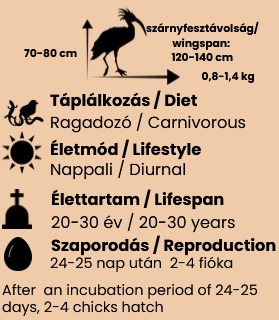
Diet: its diet consists mainly of insects, larvae, and worms. It has a long, downward-curving beak and black plumage with a characteristic greenish sheen.
Until about 300 years ago, the Northern Bald Ibis lived in the Alps, North Africa, and the Middle East. Currently, it survives in parts of Morocco, Turkey, and Syria. Thanks to reintroduction programs, it has become established in Europe once again. Chicks are born with feathers covering their heads, but these are gradually lost as they age. Due to its unusual appearance, early depictions of the bird were often dismissed as figments of the imagination. In antiquity, it even had its own hieroglyph, meaning “spirit” (akh). In 1504, the Archbishop of Salzburg banned its hunting, making it arguably the first protected animal in history.
The Northern Bald Ibis nests in rocky areas, building its nest from branches and leaves. They breed in colonies, and both parents share the responsibility of raising the chicks.