
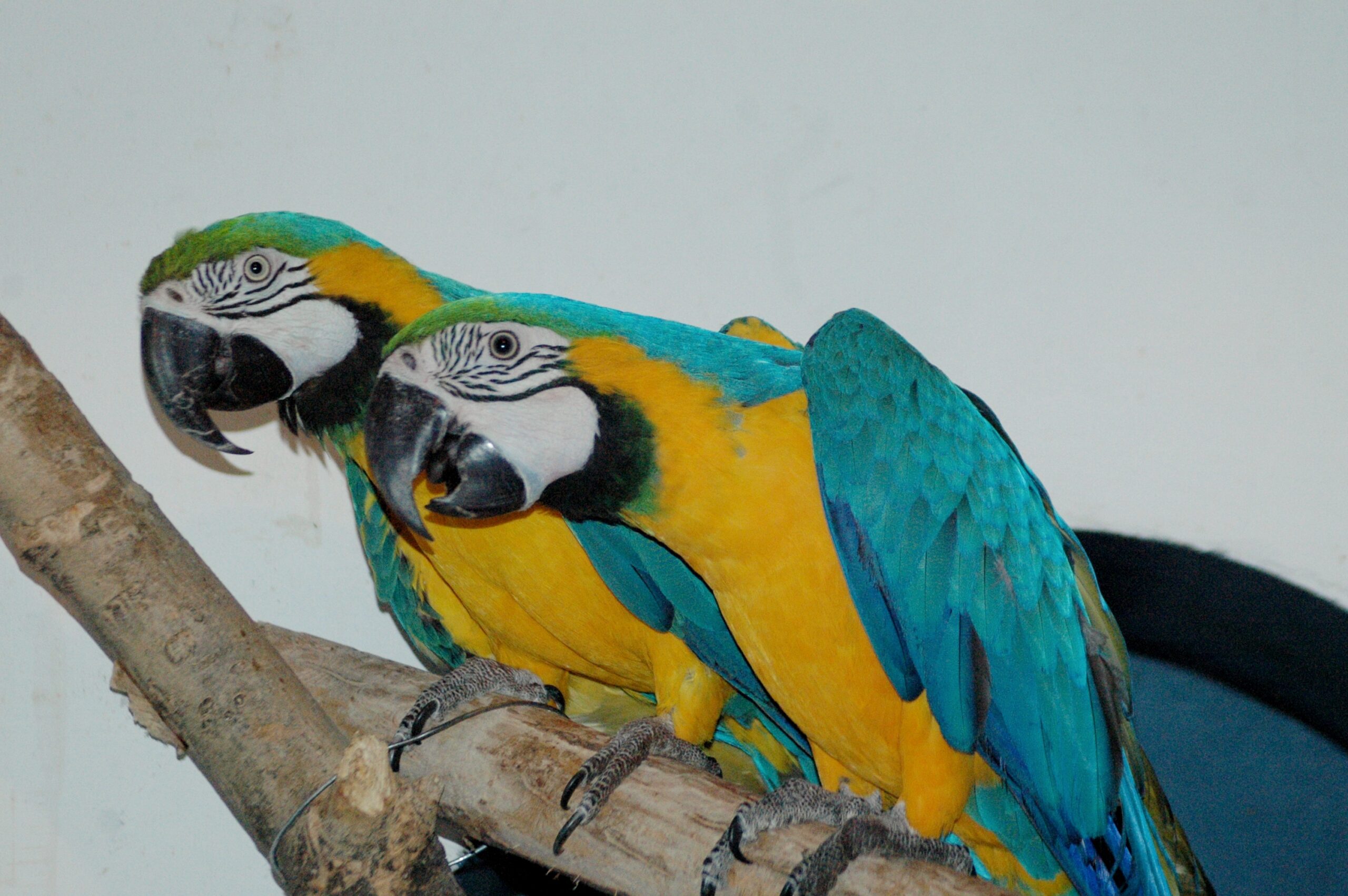
Blue-and-yellow Macaw (Ara ararauna)
Order: Psittaciformes
Family: Psittacidae
IUCN Red List: LC (Least Concern)

II.
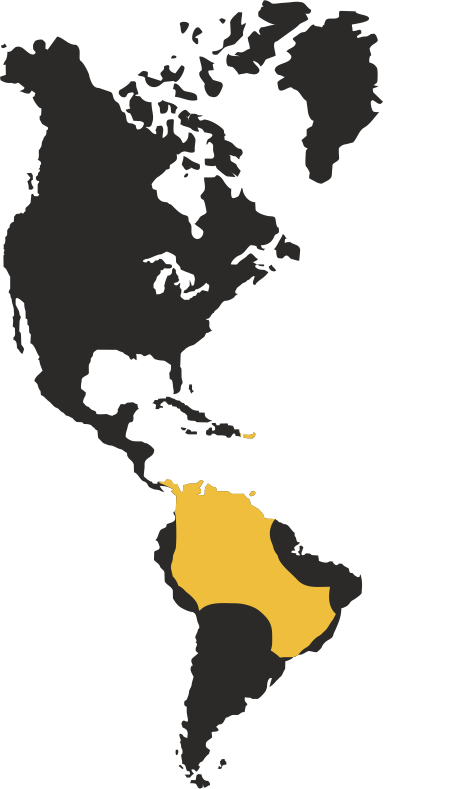
Habitat
Blue-and-yellow Macaws live in the swampy areas and along the rivers of the South American rainforests.
Information
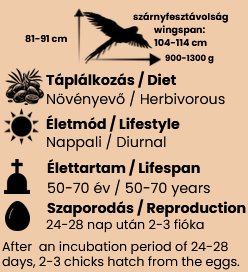
They nest high up in trees, often occupying hollows made by other animals. They choose a partner for life. The chicks hatch blind and featherless; initially, the female cares for them, but later the male also participates. Their feathers begin to grow after 10 days. Both parents are very aggressive toward intruders to protect their offspring. The sexes are difficult to distinguish by appearance; only a medical examination can determine them accurately.
Diet: they enjoy consuming seeds, nuts, and fruits. In certain cases, they consume clay found along riverbanks, which helps neutralize toxins and provides them with essential minerals.
Blue-and-yellow Macaws live in pairs but may also gather into larger groups. When flying in pairs, their wings almost touch. They are extremely cautious; at the slightest sign of danger, they take to the air while screeching loudly. Their calls can be heard from as far as 1.6 km away. They are often observed in mixed groups with other macaw species or smaller parrot species. They are capable of mimicking words and sounds.