Animal talk&feeding: Public Harbour Seal Training
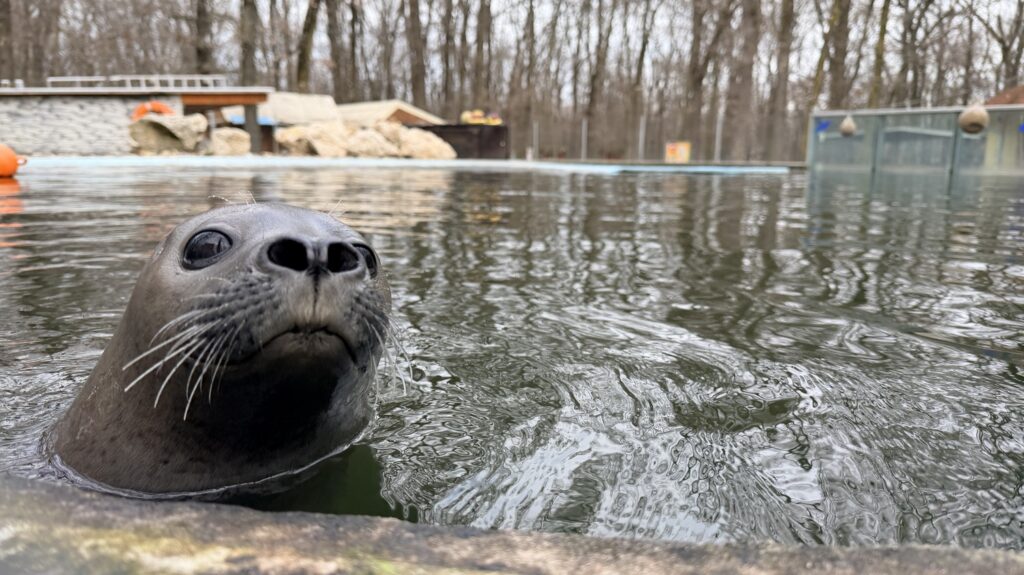
Our harbour seals were born in 2015: Miló moved from Germany to the banks of the River Tisza, while Helga was born here at Szeged Zoo. Their first pup together, Peti, was born in the summer of 2024. Harbour seals, like many other animals, are trained through playful exercises based on positive reinforcement. This is not only an animal-friendly method but also far more effective than using punishment.
Veterinary care is an important part of the training. Successful examinations depend on trust, as the seals must allow themselves to be examined on land, where they feel less comfortable than in the water. For X-rays or ultrasound examinations, they are asked to remain still. We also check their mouths and teeth, flippers, backs and bellies. Getting them accustomed to a transport crate is essential too, as it helps reduce stress during journeys.
Although harbour seals can be kept in freshwater, salt has a beneficial effect on their eyes, skin and fur. A smaller saltwater pool provides this for them, and they enter it both voluntarily and on request.
Not every element of a training session is always successful. Besides being rather stubborn, harbour seals can be sensitive to changes in mood, weather fronts and external noises. They may also be frightened by an unfamiliar object, in which case they retreat to the safety of the water.
Most seal shows feature sea lions, which are considerably larger than harbour seals and move much more skilfully on land. Now, however, you can see for yourselves just how playful and acrobatic our harbour seals are. Their stocky bodies mean that they cannot balance a ball on their noses, support themselves on their flippers on land or clap with them, but as you can see, they thoroughly enjoy playing in the water.
The time needed to learn a task varies between species and individual animals. When Miló arrived, he responded only to his name; he learned every other exercise here. Helga began learning tasks from her parents at a very young age and even spontaneously offered some behaviours to her trainers. You will see her perform the “dolphin jump” during the session. Peti is extremely enthusiastic and can learn certain tasks in just a few minutes. Although the seals do not always feel like completing their exercises, they are always eager to play – much like dogs.
Seals are naturally playful and enjoy playing with pebbles and shells in the wild. Here, balls and hoops serve as substitutes. However, it is not all fun and games. Because of environmental pollution, harbour seals in their natural habitat are now often seen playing with plastic bottles and rubbish instead of pebbles and shells. While playing, they may swallow these objects. Although they do not have hands, they can grip interesting items skilfully with their teeth. If they swallow them, whether accidentally or deliberately, the objects may even cause their death.
Harbour seals living in European waters, like most marine animals, face serious threats – largely because of human activity. We hope that seeing our seals will remind you of the extraordinary creatures that inhabit our seas and oceans.
It is important to understand that with a little more care, the seas could continue to provide us with sustainable sources of food for a long time. But what can we do from here, far from the sea? A great deal! We can choose products made using environmentally responsible methods. These are often identified by certification labels on their packaging. By making informed choices, we can help environmentally friendly practices become more widespread and contribute to protecting the entire natural world.