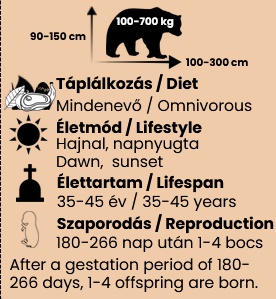

European brown bear (Ursus arctos arctos)
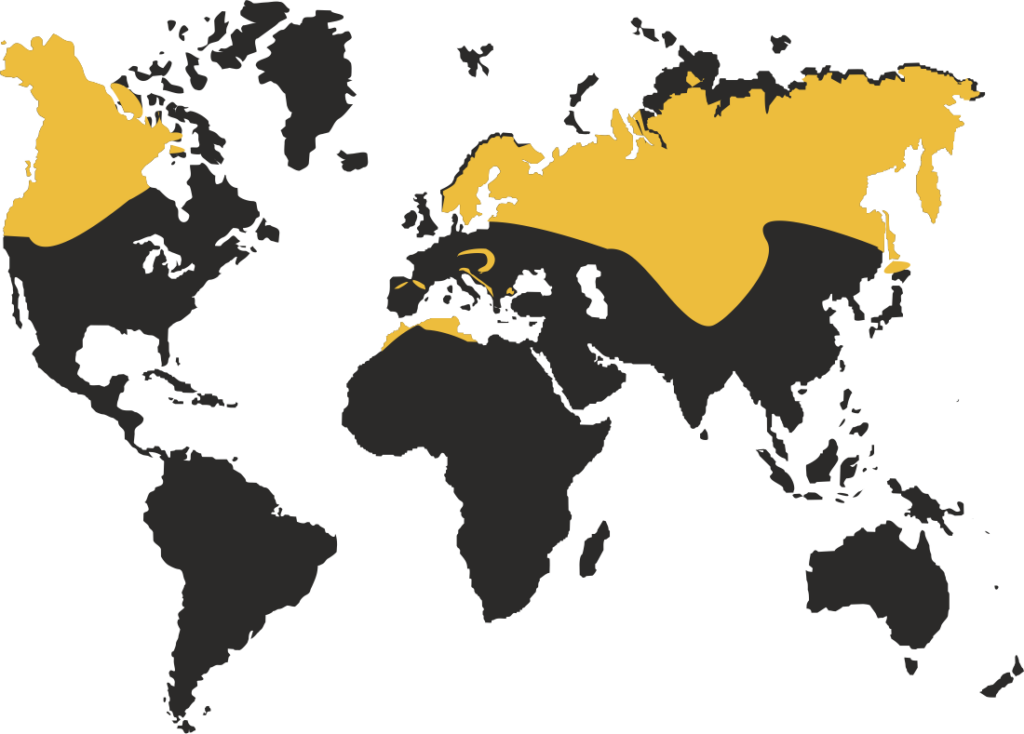
Habitat: Europe, North America, Asia, mainly mountain regions
Diet: Omnivorous
The brown bear is one of the most successful large predators on Earth, found across North America, Europe and Asia. It has many subspecies, including the European brown bear, the massive Kodiak bear, the well-known grizzly, as well as the Tibetan and Syrian brown bears.
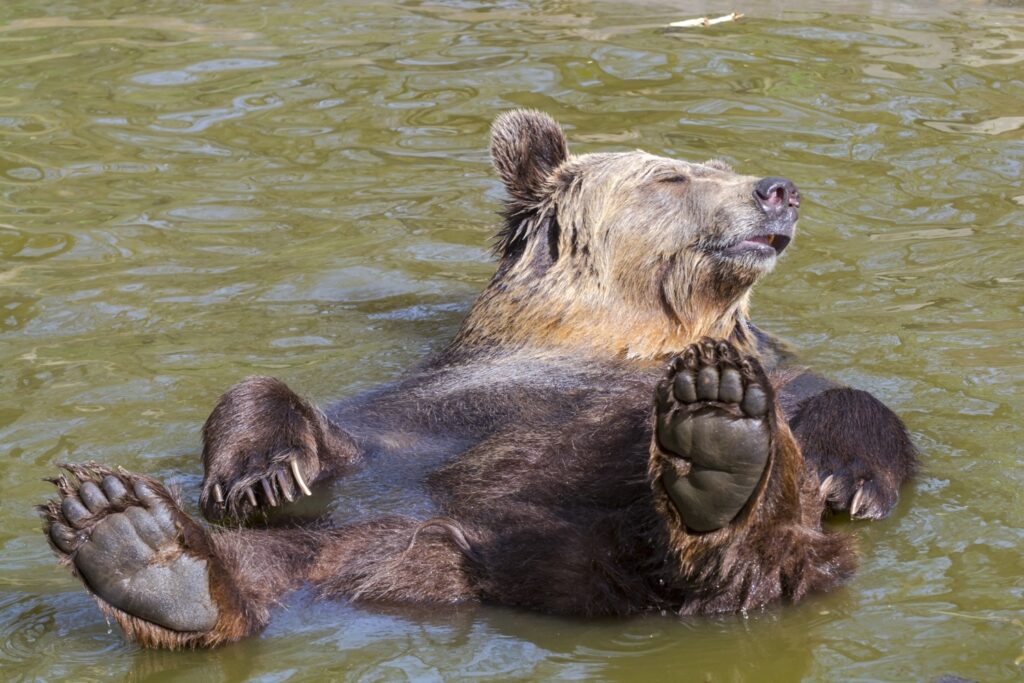
Its winter rest usually begins between October and December and lasts until March, although in warmer regions it may not occur at all. This state is not true hibernation: the bear’s body temperature drops only slightly, it can wake up easily, and may even move around during this period. Despite the common belief that bears spend the winter in caves, they more often choose dens dug into the ground. These are lined with dry vegetation to provide insulation and warmth.
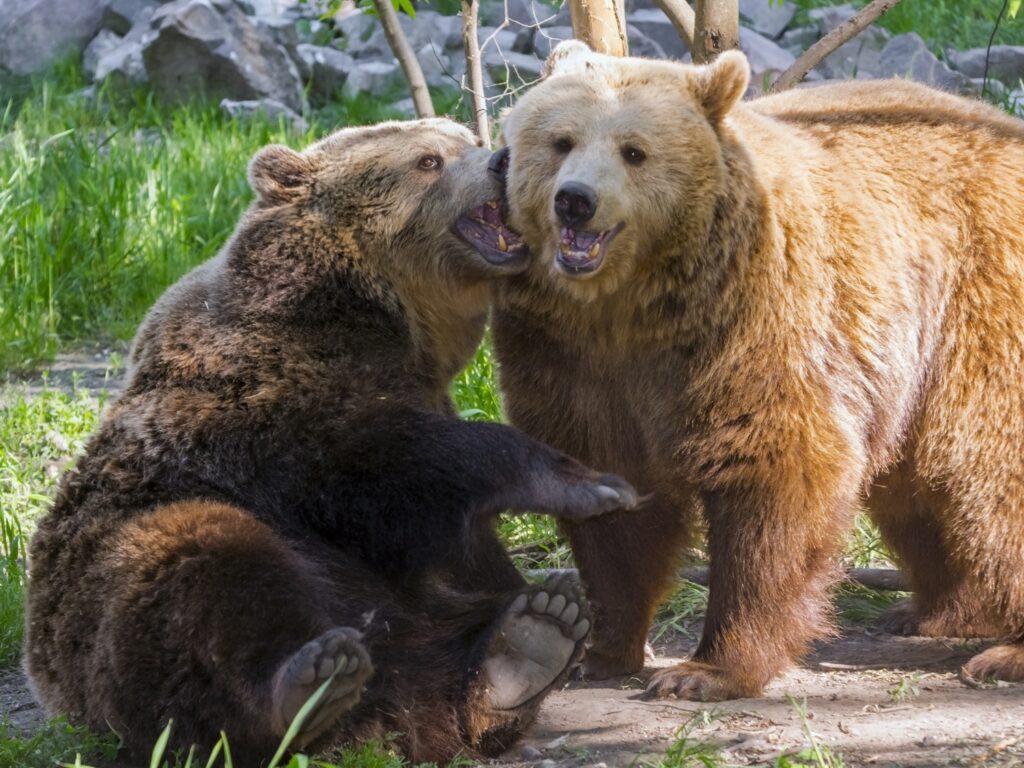
The mating season takes place in early summer, but the fertilized egg remains dormant for a time. Actual development begins months later through a process called delayed implantation, ensuring that the cubs are born during winter. Newborn cubs are tiny, blind and hairless, weighing only 340–680 grams, but they grow rapidly and can reach up to 15 kilograms by the age of three months.
Although often seen as a typical predator, a large part of its diet consists of plant material. Its most important sense is smell, which allows it to detect food or the presence of other bears from several kilometers away. Its eyesight, however, is relatively weak and comparable to that of a dog.
Carnivora / Ursidae
IUCN Redlist: LC (Least Concern)


I/II.