
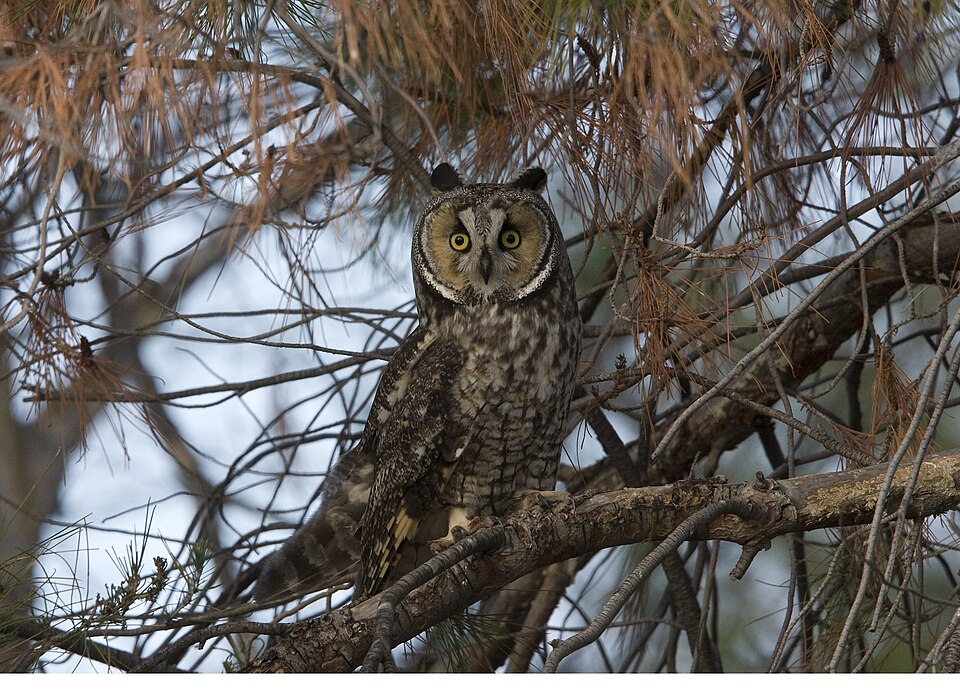
Long-eared owl (Asio otus)
Order: Strigiformes
Family: Strigidae
IUCN Red List: LC (Least Concern)

II.
Habitat
Forests in Europe, North-America, Asia.

Information
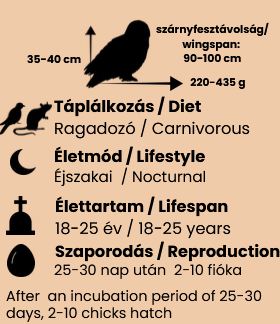
Diet: their diet mainly consists of small mammals, but they also readily consume birds, reptiles, amphibians, and arthropods.
The Long-eared owl is the most common owl species in Hungary. It is a medium-sized bird with brownish plumage and characteristic ear tufts. Females are larger than males. While the local Hungarian population remains throughout the winter, individuals from more northern regions also arrive to spend the winter months here.
In winter, they often move into settlements, where dozens of individuals can be observed roosting together on evergreen trees during the day. The dense foliage of evergreens provides protection against both predators and the cold. They begin searching for food at dusk. Their hearing and vision are excellent, and the specialized structure of their plumage allows them to fly silently.
The Long-eared owl does not build its own nest; instead, it breeds in hollows or the abandoned nests of corvids (crow family). The chicks leave the nest before they are capable of flight and perch on nearby trees. This is likely because they outgrow the nest space, and spreading out reduces the chance of a nest predator destroying the entire brood at once. The Long-eared owl prefers forest edges and groves, generally avoiding dense, closed forests.