

White stork (Ciconia ciconia)
Order: Ciconiiformes
Family: Ciconiidae
IUCN Red List: LC (Least Concern)
Habitat
Africa, Europe, Asia

Information
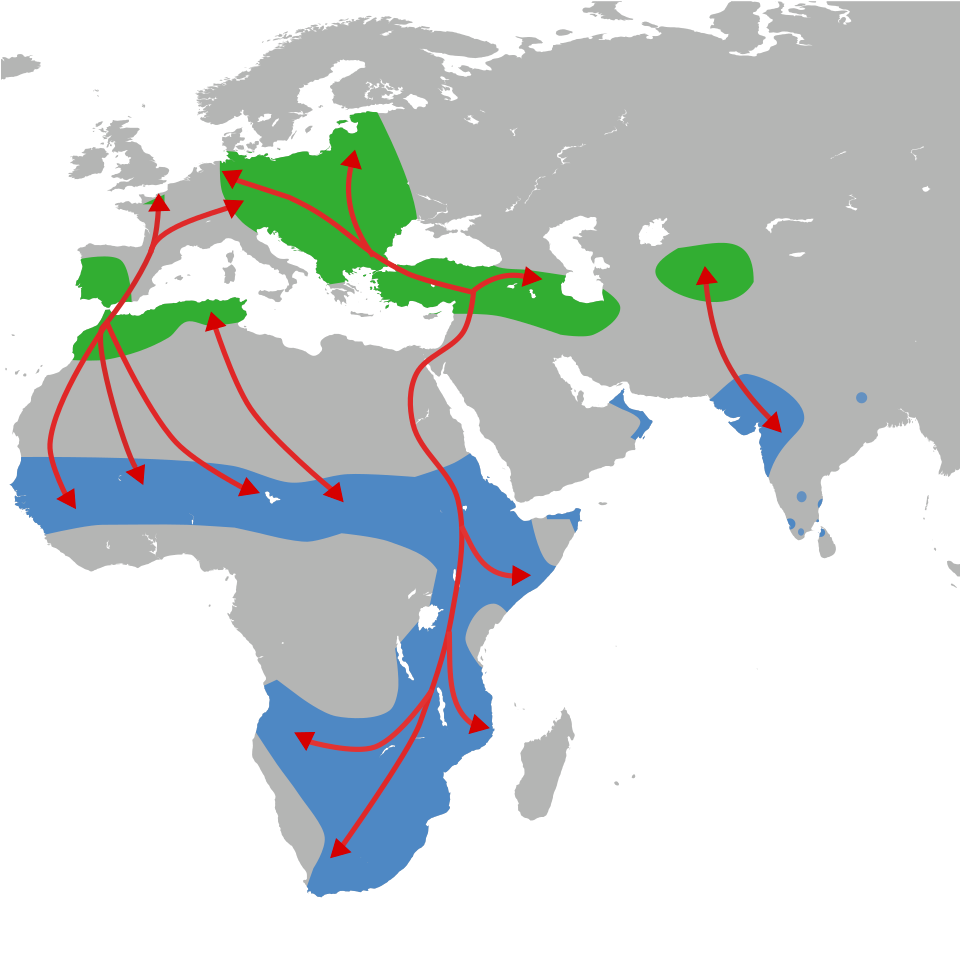
Habitat: white storks are widespread across three continents. In Hungary, they breed throughout the country, except for the higher regions of the central mountains. They spend approximately five months here; the remaining seven months are spent migrating or staying at their wintering grounds in Africa. They migrate not because of the cold, but due to a lack of food, departing almost exactly around August 20th. They return in the spring, by early April at the latest. Several instances of overwintering storks have also been observed.
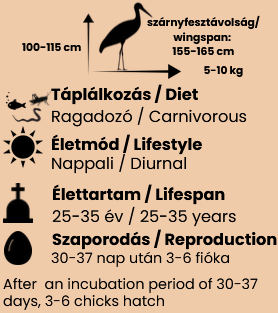
Diet: carnivorous. Insects, earthworms, reptiles, amphibians and small mammals such as voles, moles and shrews.
In the 1940s, the majority of nests were still built in trees, though the number of pairs nesting on chimneys was not far behind. At that time, they could not yet occupy utility poles, as the electrification of villages only gained momentum in the 1950s. By 2014, the proportion of tree-nesting pairs had fallen below 1%. In spring, the males arrive first to reclaim the previous year’s nest.
Following Denmark and Germany, Hungary was the third country in the world to introduce bird banding (ringing) in 1908. White storks were banded that very year, and between 1909 and 1910, four reports were received from South Africa and Namibia.
During migration, the shortest route would be across the Mediterranean Sea, but the birds try to minimize the distance traveled over open water. Instead, they fly toward the Strait of Gibraltar or the Bosporus. They travel using soaring flight, taking advantage of rising warm air currents (thermals), which is why they begin their journey at the end of summer.