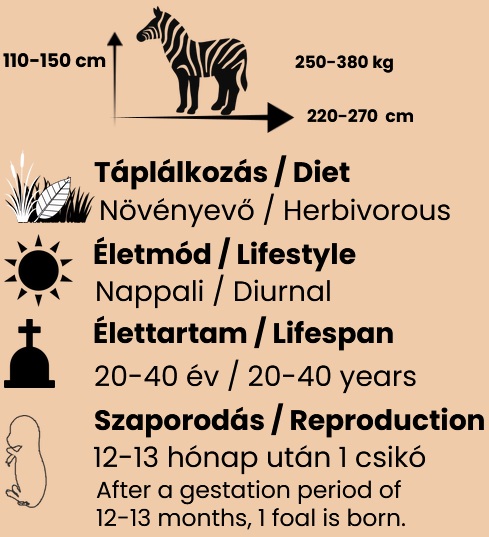
Plains zebra (Equus quagga)
Order: Perissodactyla
Family: Equidae
IUCN Red list: NT (Near Threatened)
Habitat
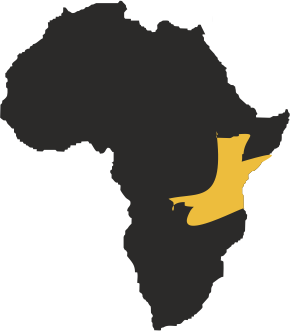
Savannas of Africa
Informations
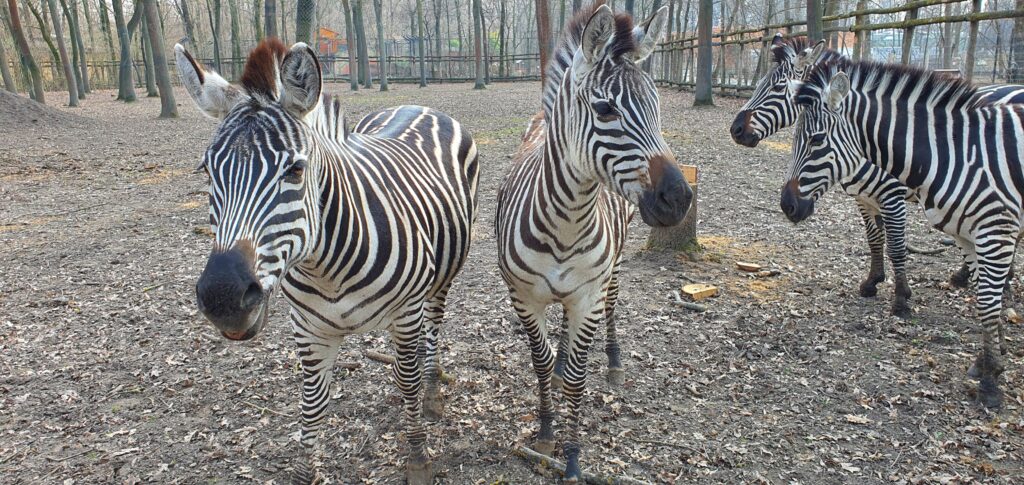
The pattern and shade of zebra stripes vary between subspecies, and even individuals within the same subspecies are never exactly alike. Much like human fingerprints, each zebra has its own unique “stripe code,” which helps them recognize and distinguish one another within the herd.
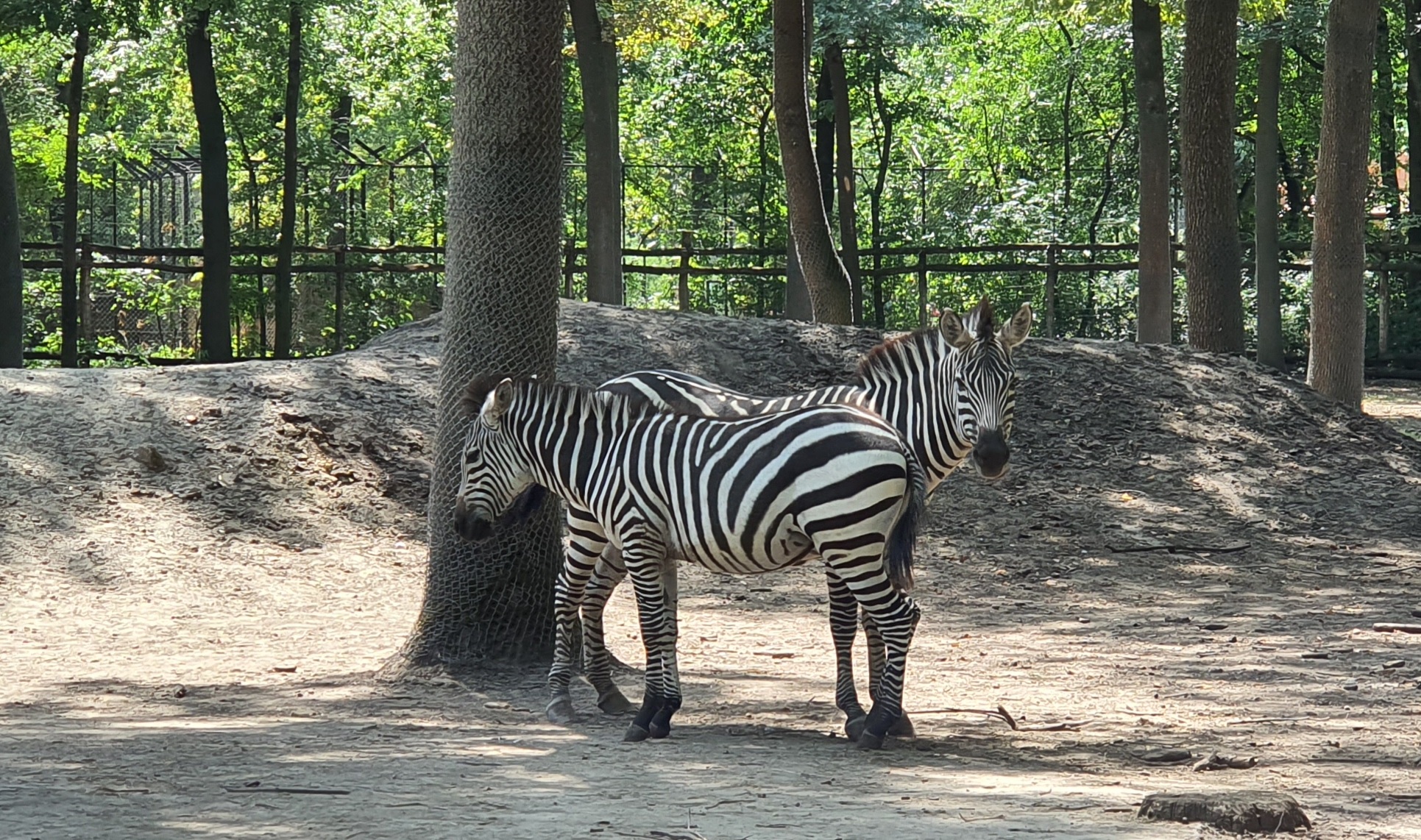
At first glance, their striped pattern may seem highly conspicuous, but in their natural habitat it actually provides effective protection. In open landscapes, the alternating dark and light stripes of animals moving together blend into a shimmering visual mass, especially in the vibrating heat of the savanna. This makes it harder for predators to single out individuals, judge distances, or select weaker prey. The stripes may also serve additional purposes, such as helping deter biting insects and aiding in the regulation of body temperature.
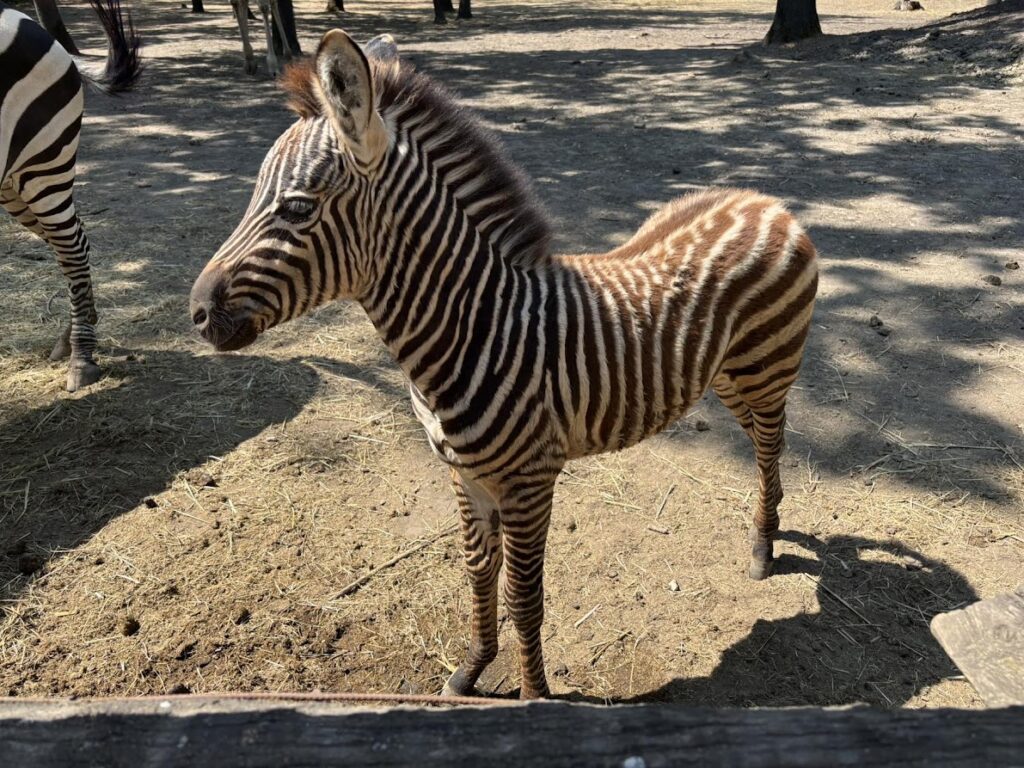
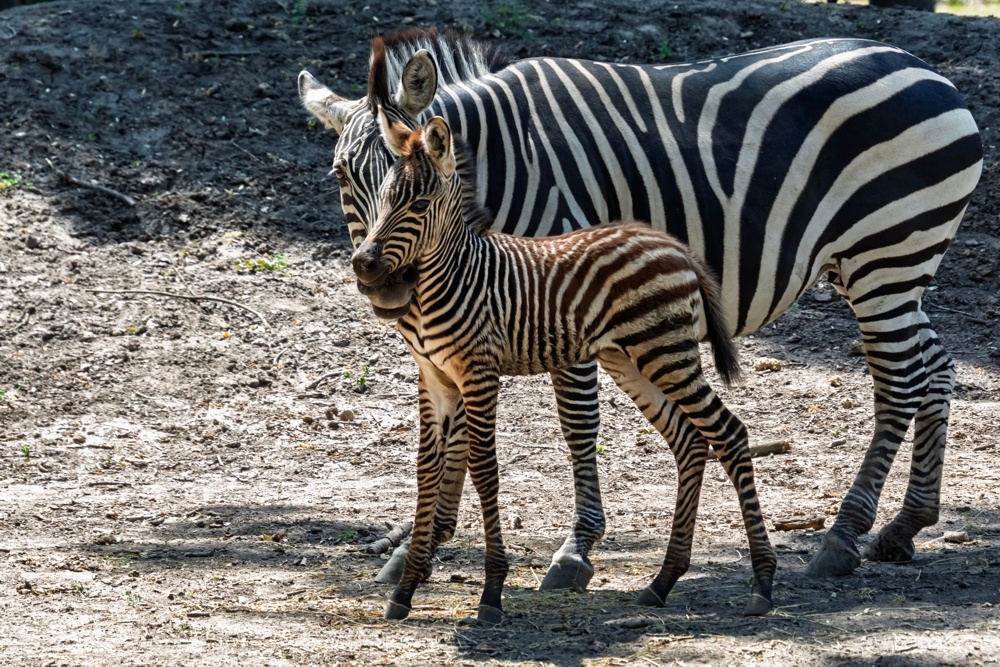
Despite their black-and-white appearance, zebras are actually very dark brown with lighter stripes. Zebra foals are clearly brown when they are born and gradually darken as they grow older. Their strong legs and remarkable endurance allow them to escape predators over long distances.
Zebras are highly social animals that live in small family groups or larger herds, where cooperation and constant vigilance play an important role in survival.
Our animals
Dora and her daughter, Zelma, who was born on January 23, 2026.
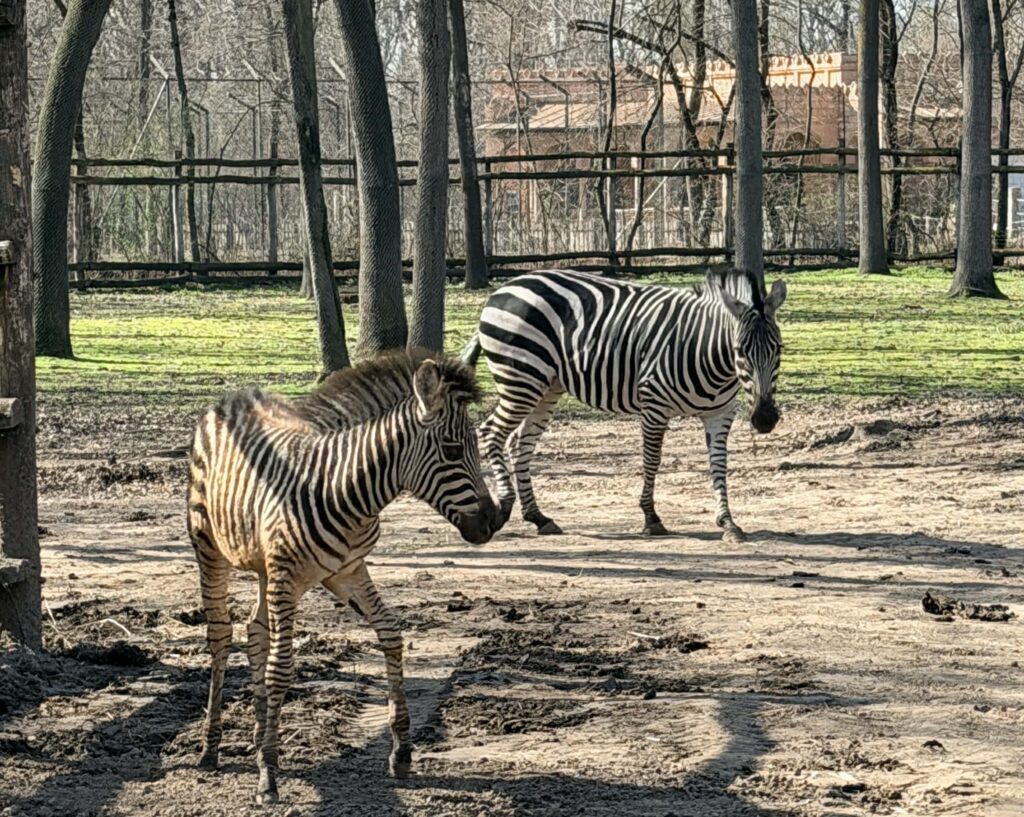
Teodora and her son, Etosha, who was born on June 22, 2025.