
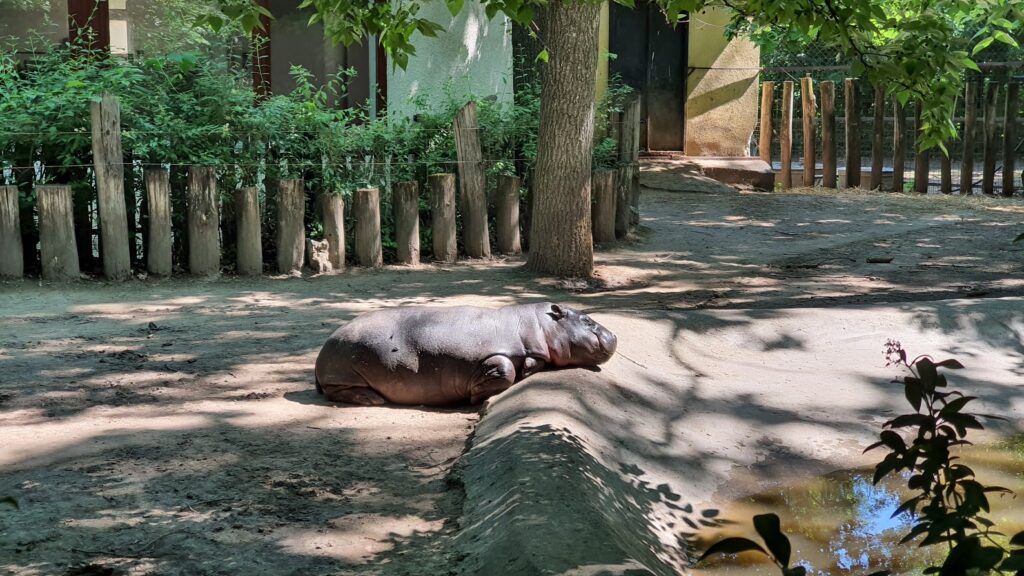
Pygmy hippopotamus (Choeropsis liberiensis)
Order: Artiodactyla
Family: Hippopotamidae
IUCN Red List: EN (Endangered)

II.

Habitat
Forests and swamps of Africa

Informations
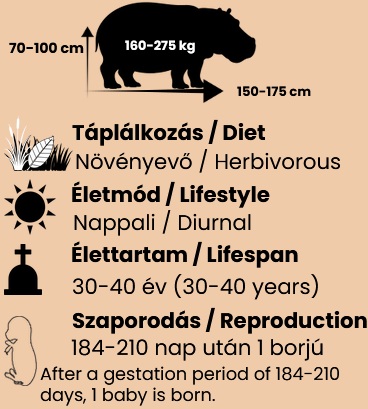
Only two species of hippopotamus live on Earth, both native to Africa: the well-known Nile hippopotamus and the much rarer pygmy hippopotamus, which was only discovered at the end of the 19th century. The two species differ not only in size but also in lifestyle. While the Nile hippopotamus spends most of the day in the water with other members of its group, the pygmy hippopotamus lives a more solitary life in rainforest areas close to water, entering rivers mainly to feed or cool down.
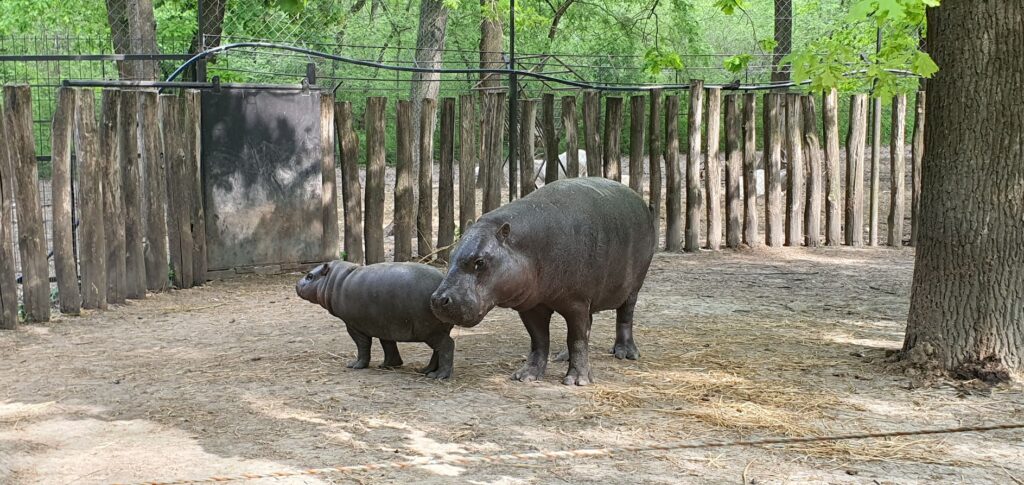
Although both species are herbivores, hippopotamuses possess large, tusk-like canine teeth. These are not primarily used for feeding but for defense and for protecting their territory. The Nile hippopotamus is considered one of the most dangerous animals in Africa, as it may attack humans who enter its territory. The pygmy hippopotamus, on the other hand, is much more secretive and usually prefers to flee when it senses danger. However, if cornered, it can also be dangerous.
When a hippopotamus leaves the water for a longer period or becomes excited, special glands in its skin produce a liquid secretion. This fluid is initially colorless but gradually turns orange-red and eventually brown. Because of this, it may appear as if the animal is “sweating blood.” In reality, this unique substance helps disinfect the skin and provides protection from the sun’s rays.
Our animals
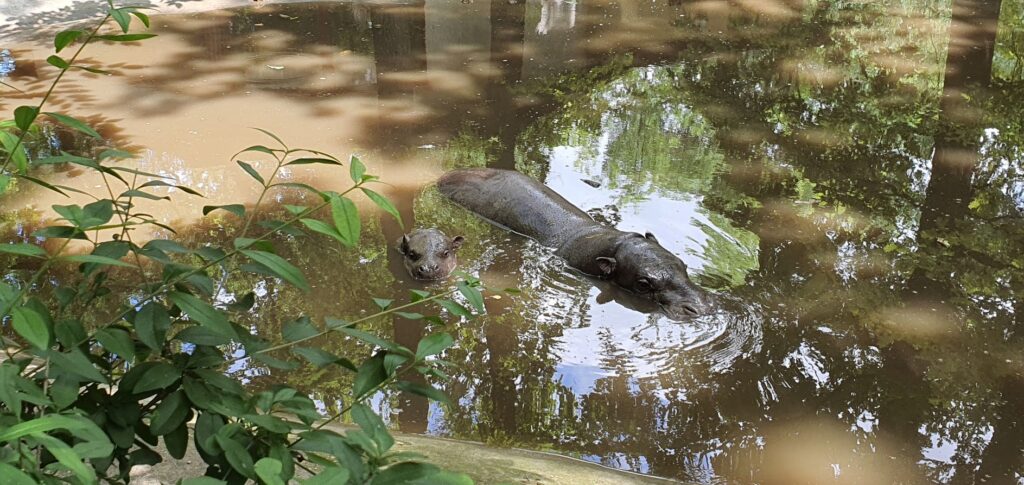
The female, Tigi, was born in Germany in 2006, and the male, Chippo, in 2007. They came to Szeged in 2008 and have had several offspring.