
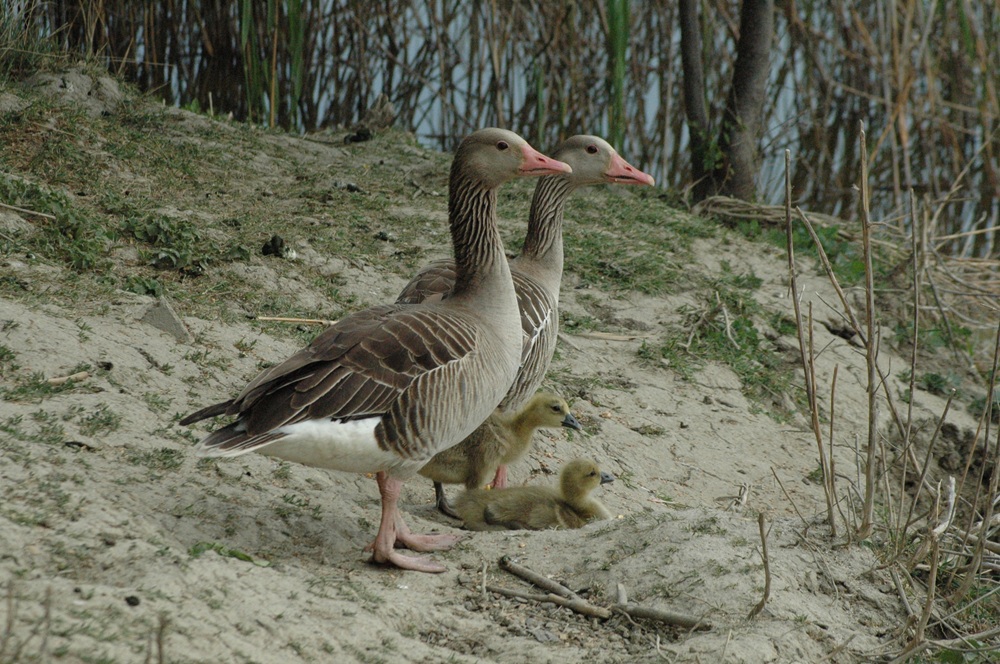
Greater white-fronted goose (Anser albifrons)
The greater white-fronted goose breeds on the Arctic tundra of Eurasia and North America. Many of the birds nesting in northern Russia travel thousands of kilometres to reach Hungary. During migration and in winter, flocks of tens of thousands may gather at our wetlands. They usually rest on the water at night and feed on nearby grasslands, crop fields and stubble fields during the day.
Greater white-fronted geese can be recognised by the white patch above their bill, their pinkish bill and the irregular black markings on the bellies of adults. Young birds do not yet have the conspicuous white forehead patch, and their bellies are less heavily marked. Their flocks may mingle with other wild geese; occasionally, the endangered lesser white-fronted goose can be spotted among them.
Greater white-fronted goose families stay close together. The female lays her eggs in a nest on the ground in the tundra, and both parents guide and protect the goslings. The young learn to fly at around 7–8 weeks of age, but the family remains together long afterwards.
During their summer moult, greater white-fronted geese temporarily lose the ability to fly. They replace their flight feathers at the same time, making a safe, undisturbed habitat especially important during this period.