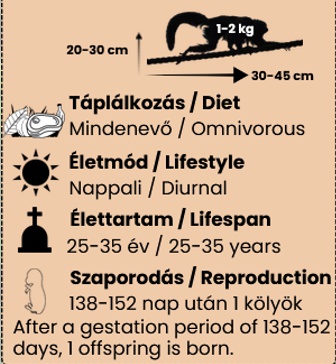

White-faced saki (Pithecia pithecia)
Habitat: Tropical rainforests of South America
Diet: Omnivorous
White-faced sakis usually live high in the forest canopy, often at heights of 15–20 meters. They also choose their nighttime sleeping places among the branches. When searching for food, they may descend to the lower levels of the canopy or occasionally to the ground. They prefer areas rich in fruit-bearing trees. When fruit is scarce, they also eat insects, flowers and leaves, but seeds are among their favorite foods.
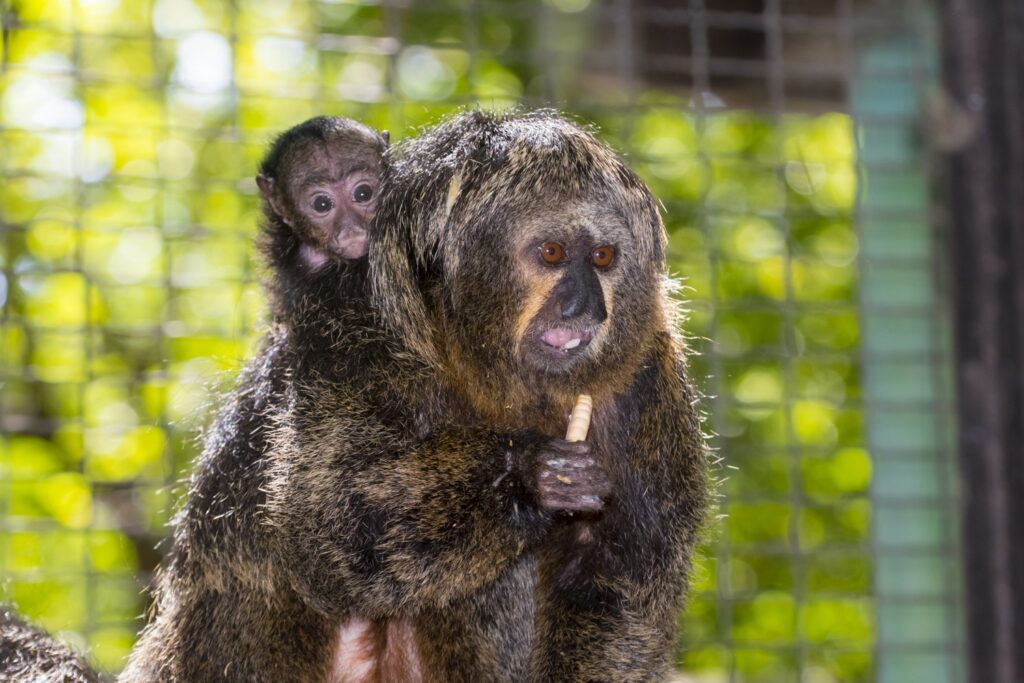
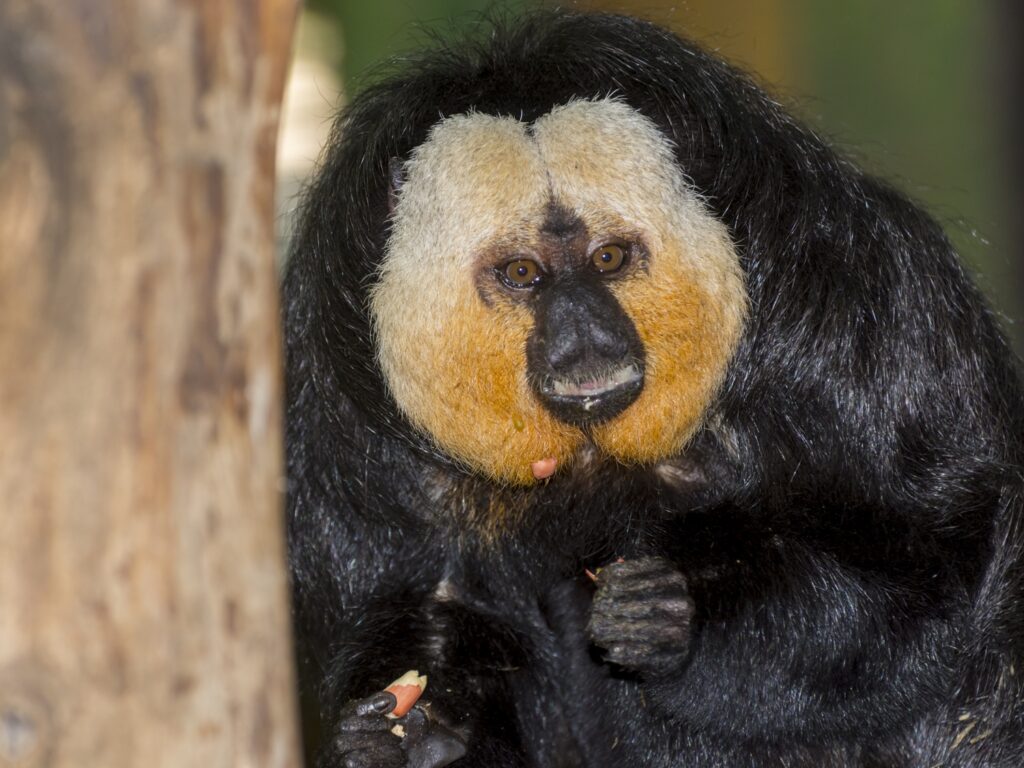
Their name refers to their distinctive appearance. Males are mostly black with striking white facial fur, while females have brownish-grey coats with a pale stripe running from the eyes to the nose.
They move skillfully among the branches of trees. Their long tail helps them maintain balance and steer while jumping, although it is not prehensile and cannot be used for grasping.
White-faced sakis are social animals that usually live in small family groups of two to four individuals. Group members travel together during the day and may cover distances of 1–2 kilometers. They use both vocal calls and scent marks to communicate and to mark their territory.
When they detect a terrestrial predator, they give alarm calls and may attempt to drive it away together. However, their greatest danger comes from birds of prey, especially the harpy eagle, which is known for hunting primates. When a harpy eagle appears, the monkeys first give warning calls, then freeze and hide motionless in the canopy.
Primates / Cebidae
IUCN Redlist: LC (Least Concern)



II.