
Red-handed tamarin (Saguinus midas)
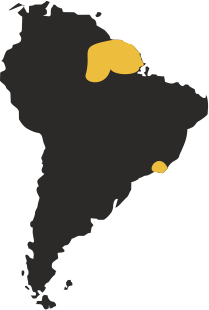
Habitat: The red-handed tamarin lives in northern Brazil, Guyana, French Guiana, and Surinam. The red-footed tamarins live in trees with small crowns (less than 15 m in diameter).
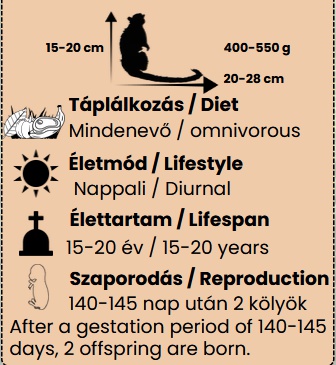
Food habits: Like most tamarins, the red-footed tamarin eats mainly insects, ripe fruit, and plant exudates such as sap, gum, and resin. It also includes nectar, tender vegetation, spiders, small vertebrates, and birds’ eggs in its diet.
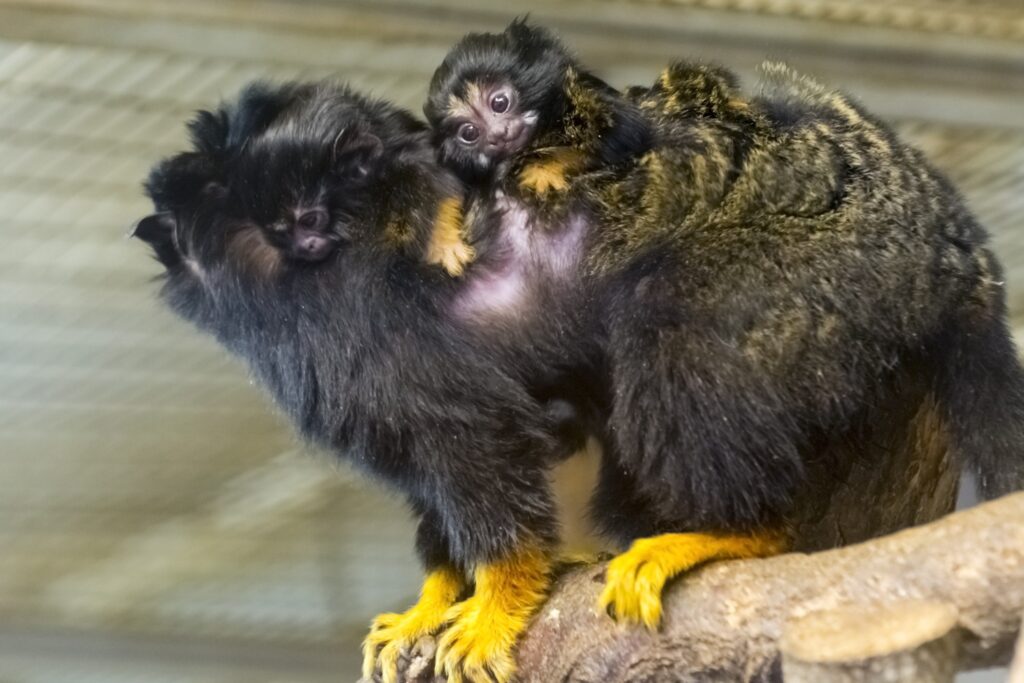
Its diminutive stature allows it to venture onto the outermost, slender branches of the rainforest canopy—areas inaccessible to larger predators. Their pelage is almost entirely black, contrasted sharply by their orange-reddish limbs.
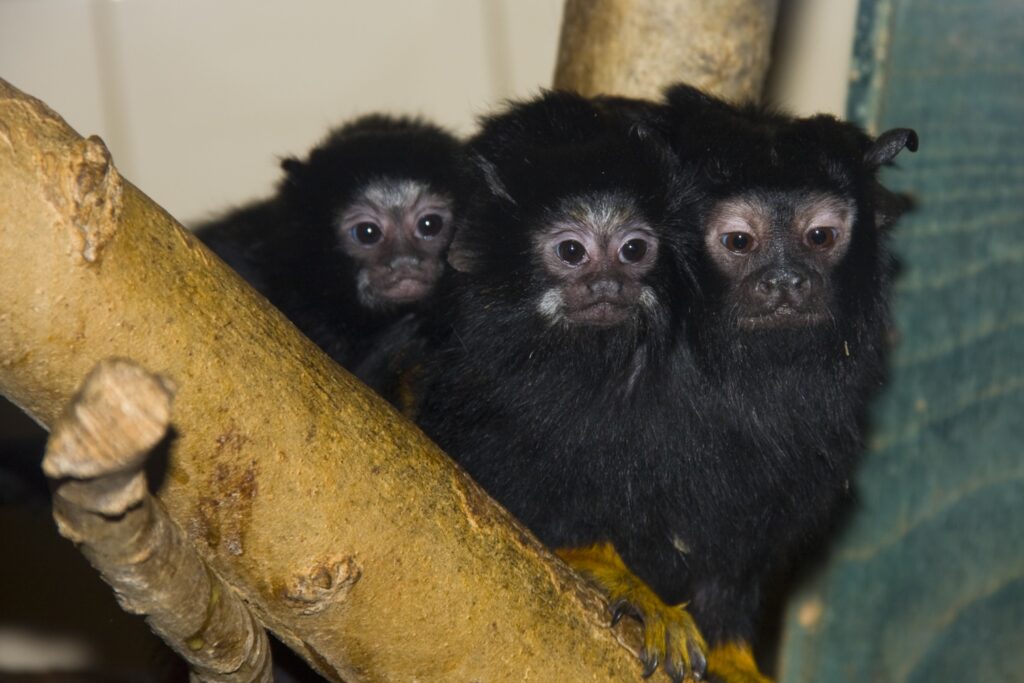
The vocalizations of this species are remarkably similar to birdsong and can be heard from great distances within the rainforest. In addition to these auditory signals, they utilize scent marking as a primary method of olfactory communication between group members.
The species derives its scientific name from the legendary King Midas. According to the myth, Midas asked Dionysus for the power to turn everything he touched into gold. Dionysus granted the wish. As Midas journeyed home, he tested his new power on various objects: a branch he broke and a stone he touched instantly transformed into solid gold. However, his joy soon turned to terror when he realized that even food and drink underwent the same transformation. He understood that despite his immense wealth, he was destined to perish from hunger and thirst.
He implored Dionysus to revoke the fatal gift, and the god commanded him to bathe in the waters of the Pactolus River. Following his bath, the river was said to carry grains of gold in its waves. King Midas grew to loathe wealth and gold, spending the rest of his days living a modest life traveling throughout his kingdom.
Primates / Cebidae
IUCN Redlist: LC (Least Concern)


II.