
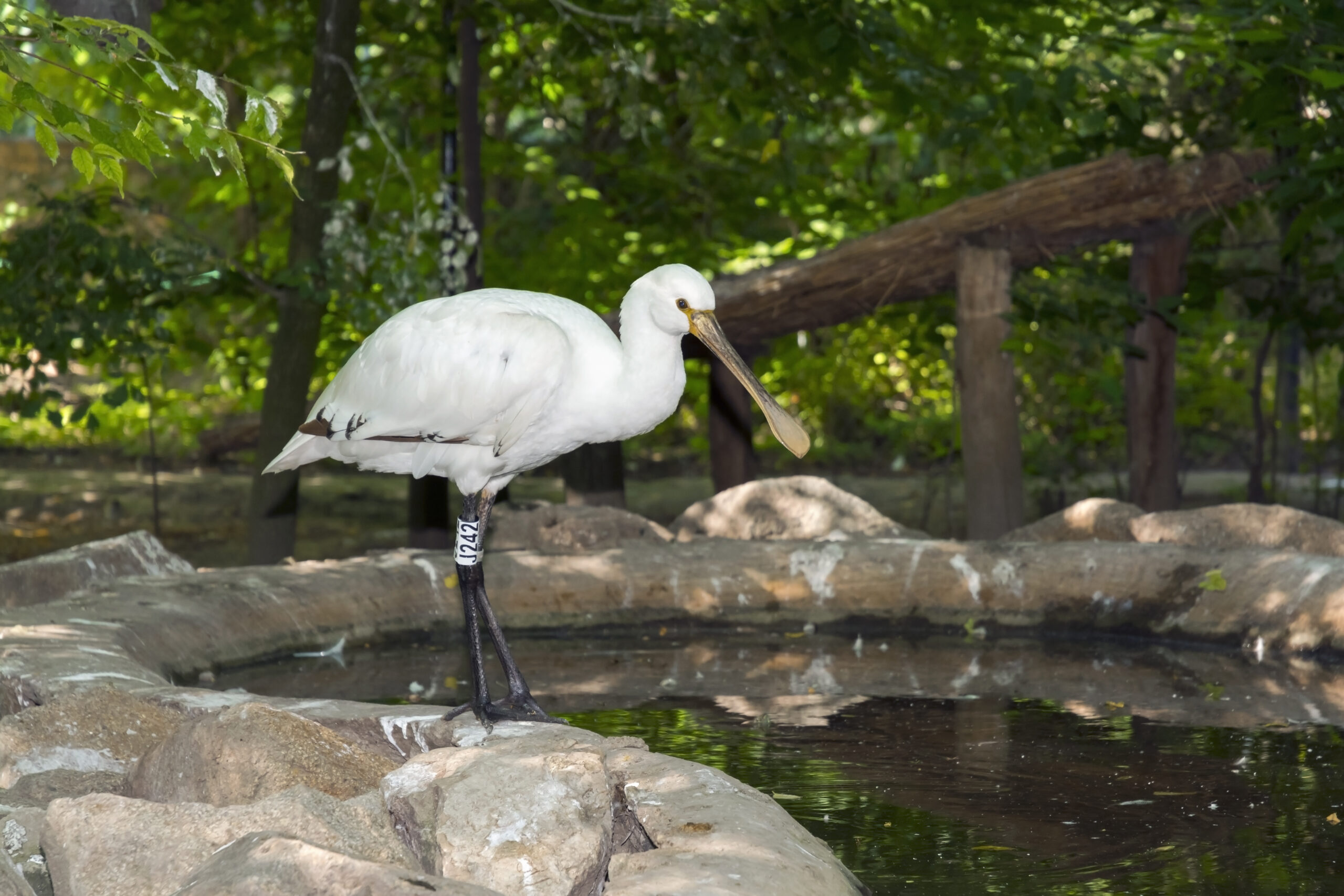
Eurasian spoonbill (Platalea leucorodia)
Order: Pelecaniformes
Family: Threskiornithidae
IUCN Red List: LC (Least concern)

II.
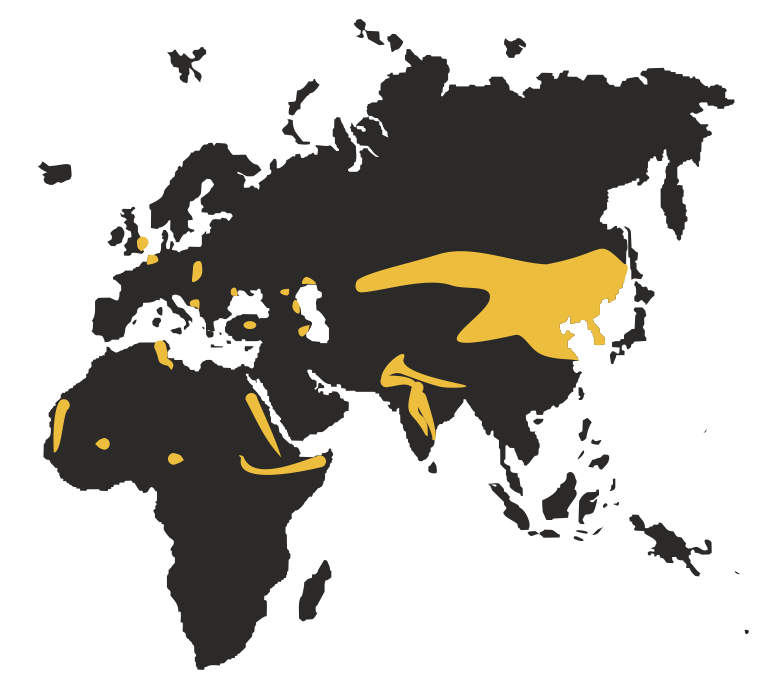
Habitat
Europe, Asia, Africa
Informations
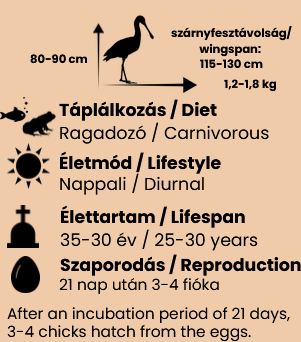
Diet: carnivorous. They hunt for food while wading through the water. Their spoon-shaped bills are incredibly rich in nerve endings; as they perform a characteristic “mowing” or side-to-side motion in the water, they stir up the mud, and their sensitive bills immediately detect any animals present.
The Eurasian spoonbill is named after its long bill, which widens at the end into a spoon-like shape. Unlike herons, it flies with its neck outstretched, similar to storks.
In Hungary, the majority of the population nests in the wetlands of the Great Plain. While they usually nest in reed beds, they can also be found in trees and bushes. For a successful breeding season in the reeds, waist-deep water is necessary to protect the eggs and chicks from predators, such as wild boars. During dry periods, they are able to raise fewer chicks, as the older siblings often prevent the smaller ones from accessing food.
Eurasian spoonbills spend the winter in the Mediterranean region, with a smaller number traveling beyond the Sahara. However, some young individuals attempt to overwinter within the Carpathian Basin.
They prefer shallow, nutrient-rich habitats. These areas often dry out or, due to flooding, become too deep for the spoonbills to forage.