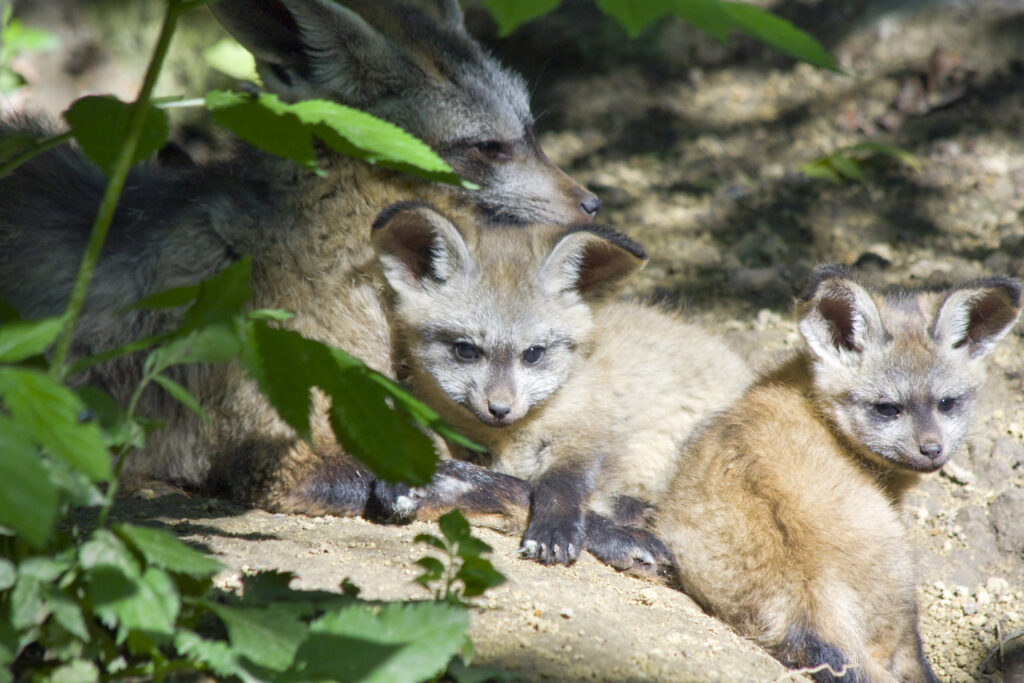
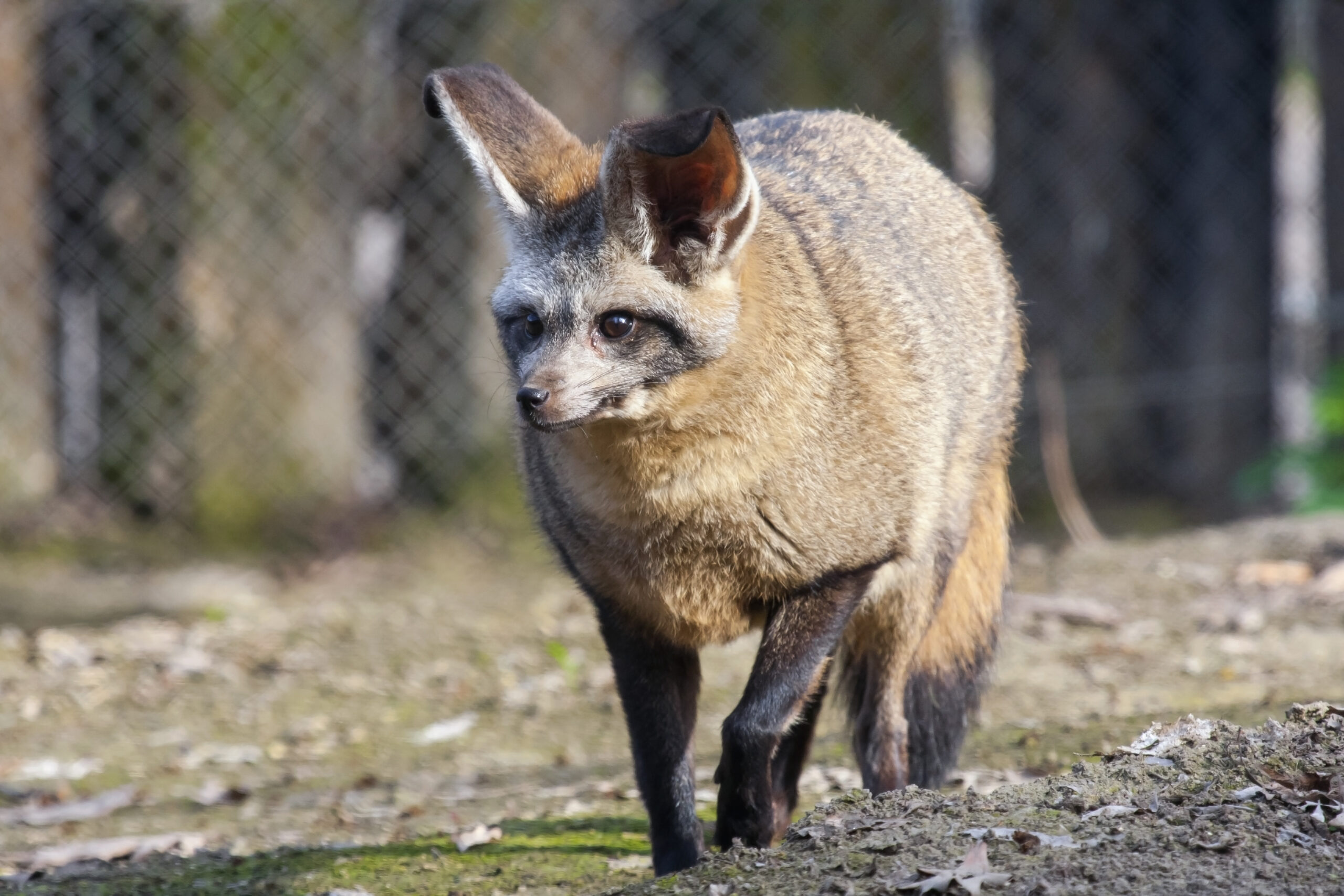
Bat-eared Fox (Otocyon megalotis)
Order: Carnivora
Family: Canidae
IUCN Red List: LC (Least concern)

Habitat
Low-grass savannas of Africa

Informations
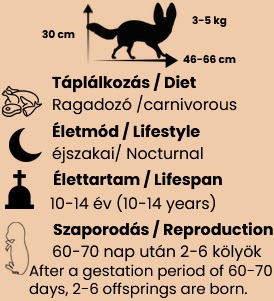
The bat-eared fox has remarkably large ears compared to its body size. These oversized ears help the animal regulate its body temperature in the intense heat, preventing overheating. They also serve another important purpose: with such sensitive hearing, the fox can easily detect termites underground, which are among its favorite foods.
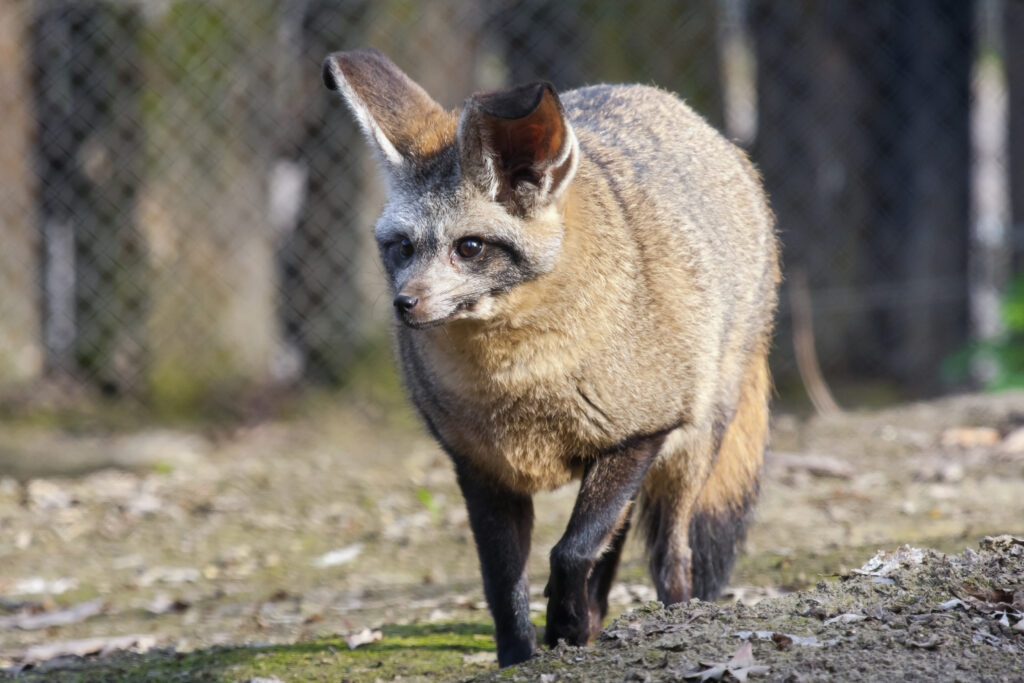
Among mammals, the bat-eared fox has one of the highest numbers of teeth, with 46–50 in total. Its diet mainly consists of insects, especially termites, but it also eats small rodents, bird eggs, and occasionally plant material.

Because of its relatively small body size, the bat-eared fox has many natural predators. When escaping from danger, it is able to change direction quickly while running without losing speed.
During the day it rests in burrows, which it either digs itself or occupies after other animals, such as aardvarks, have abandoned them. These burrows often have several entrances and chambers connected by tunnels several meters long. When threatened, the fox quickly retreats into these underground shelters.