White-fronted marmoset (Callithrix geoffroyi)
Habitat: Tropical rainforests along the southeastern coast of Brazil
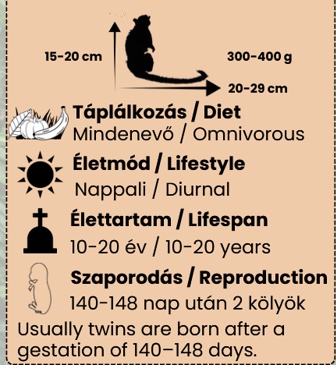
Diet: Omnivorous; feeds on small animals, especially arthropods, as well as tree sap and fruit.
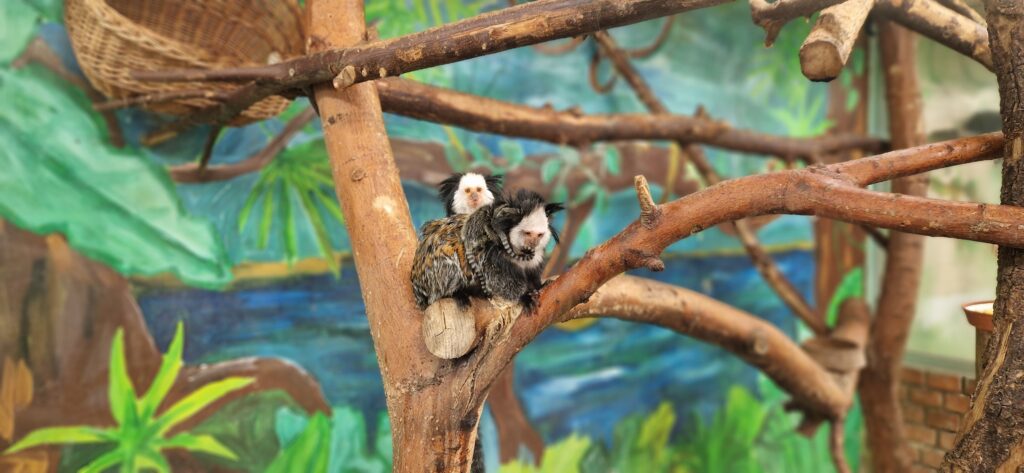
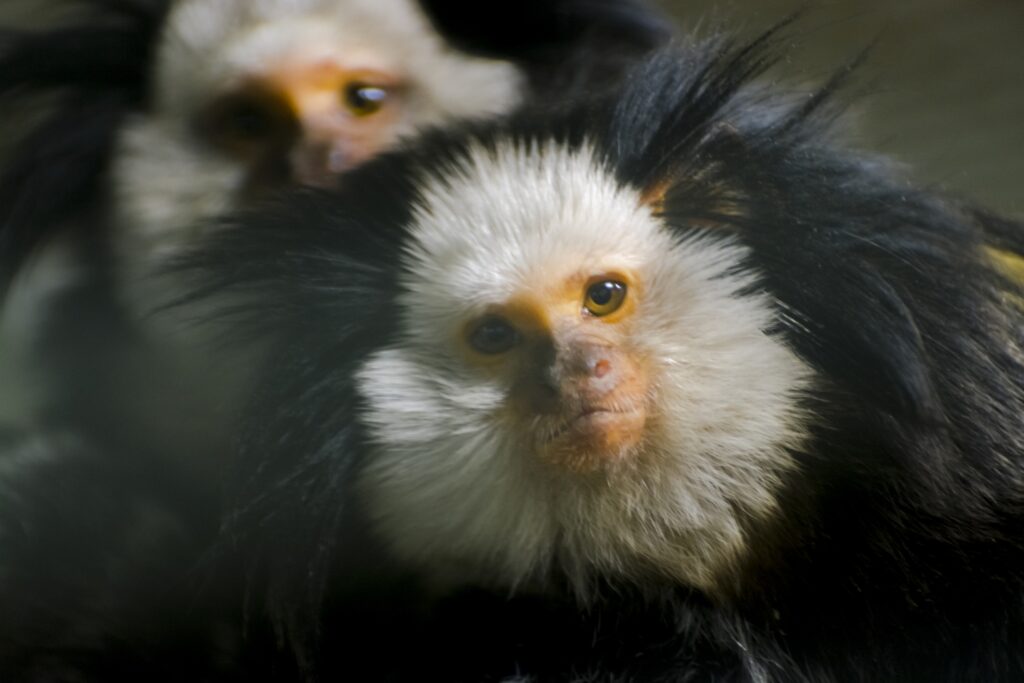
A small clawed monkey native to the forests of eastern Brazil. Its white face is framed by black ear tufts, and its long tail is marked with dark rings. It is active during the day and spends most of its time in the trees.
Tree gum and sap form an important part of its diet. It uses its incisors to gnaw into tree bark and access these secretions. It also feeds on fruit, insects, and other small animals.
Geoffroy’s marmosets live in family groups consisting of parents and offspring of different ages. Usually, only the dominant female breeds. Social interactions and scent signals may also play a role in suppressing reproduction in other females.
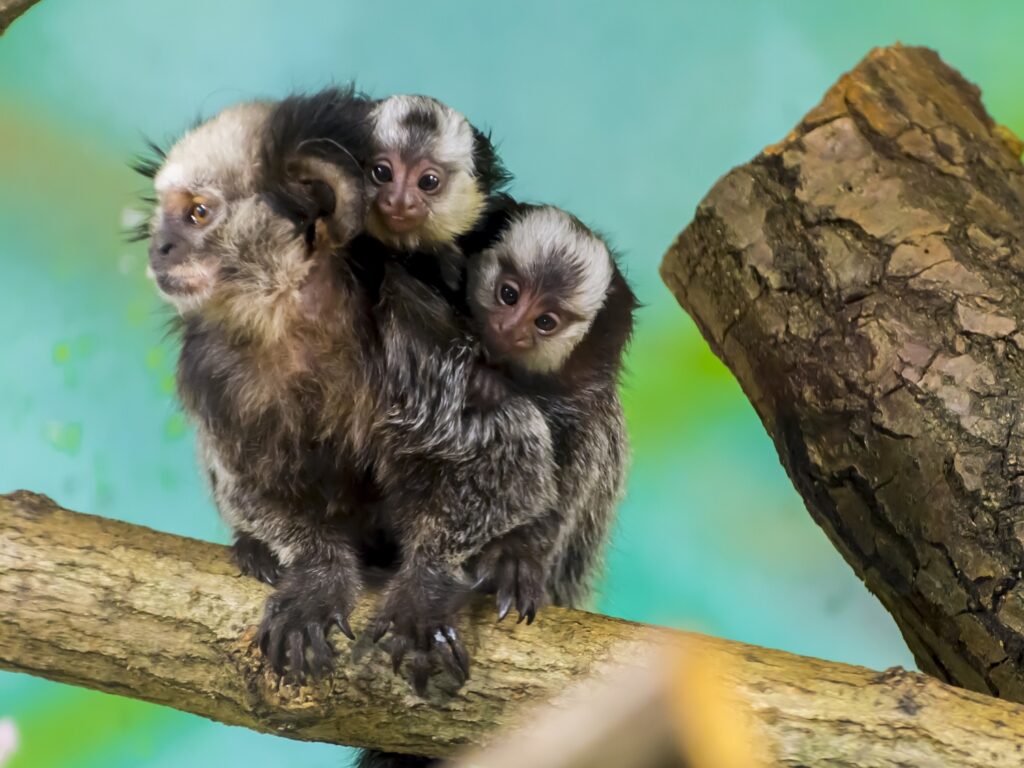
After a gestation period of almost five months, the female usually gives birth to twins. The whole family helps care for the young: the mother nurses them, while the father and older siblings often carry them on their backs. Even after beginning to explore their surroundings independently, the infants return to the reassuring safety of their family members’ backs.
The species is currently classified as Least Concern, but deforestation and habitat fragmentation have a negative impact on its populations.
Primates / Cebidae
IUCN Redlist: LC (Least Concern)



II.