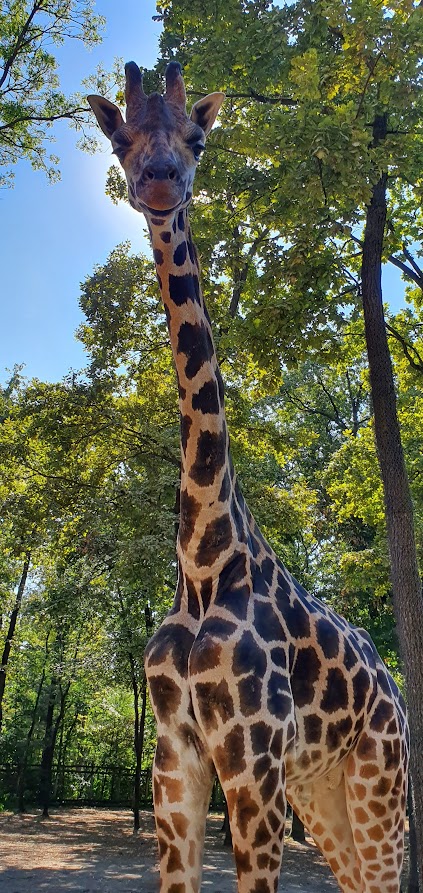
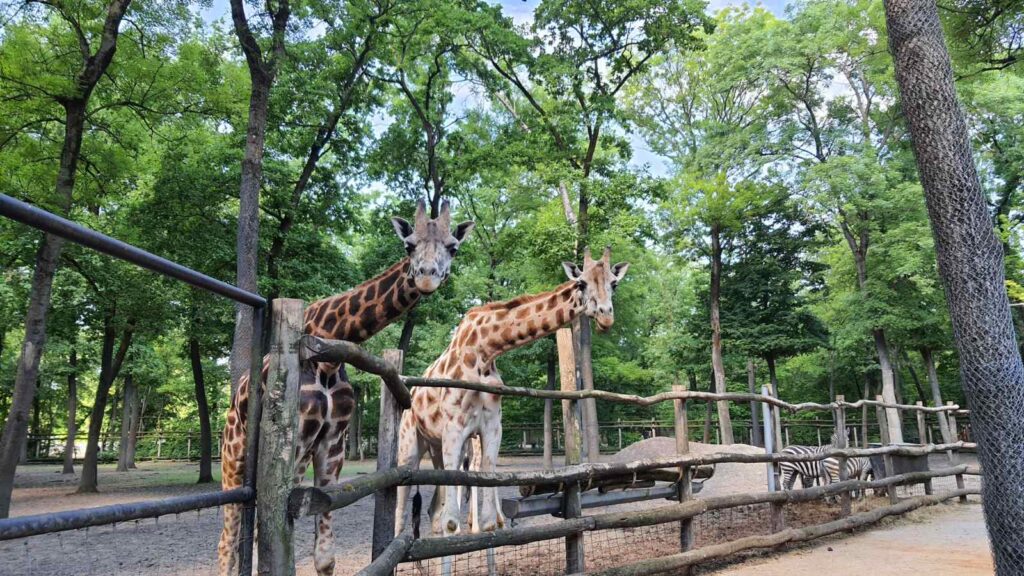
Giraffe (Giraffa camelopardalis)
Order: Artiodactyla
Family: Giraffidae
IUCN Red List: VU (Vurnerable)

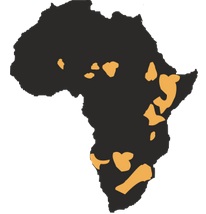
Habitat
Savannas of Africa
Informations
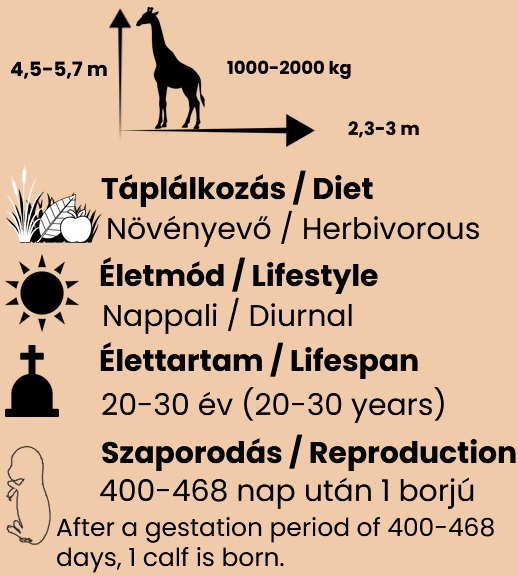
The giraffe is the tallest mammal on Earth. Males can reach heights of up to 6 meters, while females are usually about one meter shorter. A newborn giraffe is already around 2 meters tall at birth. Giraffes are native to Africa and mainly live south of the Sahara. They have disappeared from West Africa but have reappeared in small groups in some southern regions.
Giraffes rarely drink water and therefore often live far from permanent water sources, mainly on open savannas. However, males sometimes venture into denser forests in search of fresh leaves.
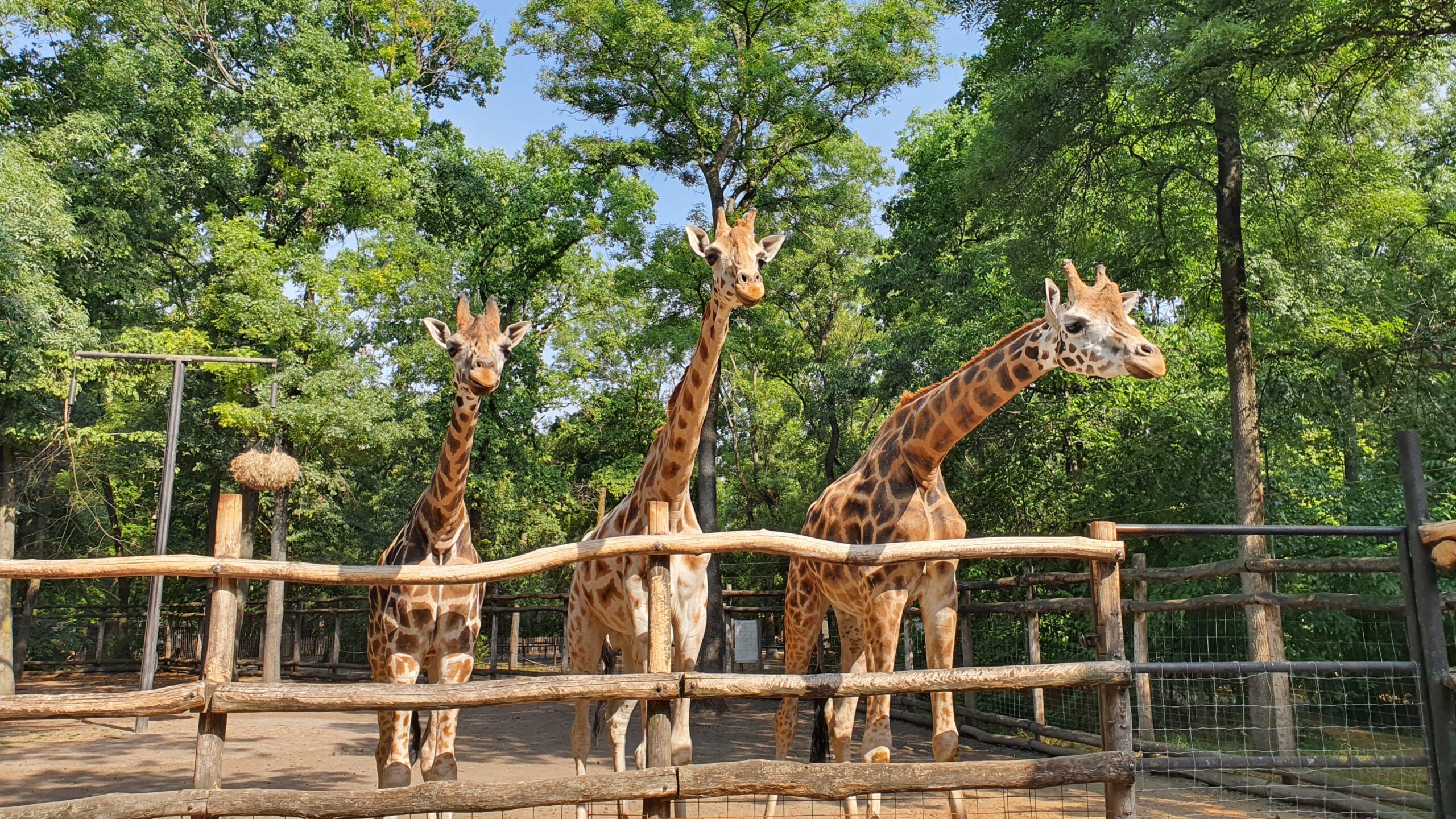
For a long time, giraffes were considered a single species with nine subspecies. However, recent genetic studies suggest that there are actually four distinct species: the southern giraffe (Giraffa giraffa), the reticulated giraffe (G. reticulata), the Masai giraffe (G. tippelskirchi), and the northern giraffe (G. camelopardalis). The Nubian giraffe, once known as Rothschild’s giraffe, is now considered a subspecies of the northern giraffe.
Each giraffe has a unique pattern of spots. Their front legs are longer than their hind legs, and their neck — which can exceed 2 meters in length — contains seven vertebrae, just like the human neck, though much larger. Their bluish-purple tongue can reach 45–50 cm in length, helping them grasp leaves from tall branches. Their horn-like structures, called ossicones, are larger in males and are used during fights between rivals.
Our animals
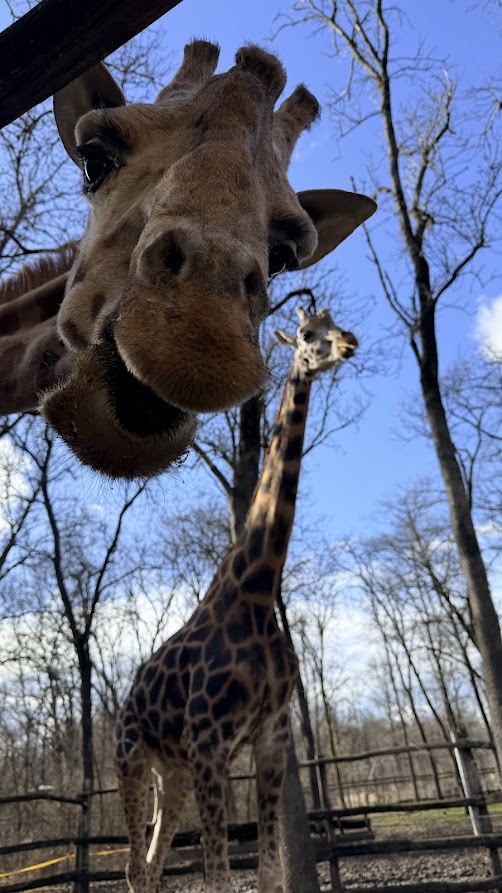
Thabo Jr., the lead male, was born in 2008 and is a member of our first giraffe group. He is our tallest giraffe.
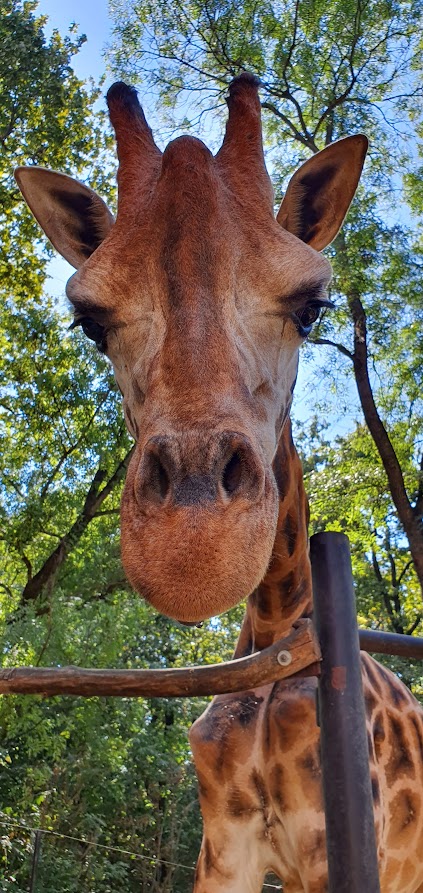
Luke was born in 2009 at the Gelsenkirchen Zoo. He moved to Szeged in 2011.
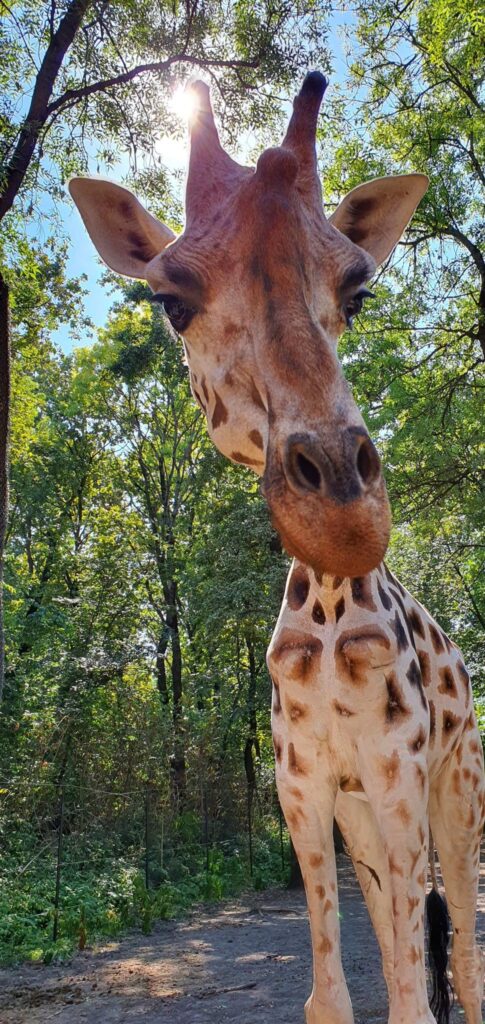
Irungu was born in Budapest on February 15, 2017. He moved to Szeged in 2020.